Unstable weather hits the UAE as funnel cloud appears over Ras Al Khaimah amid heavy rain
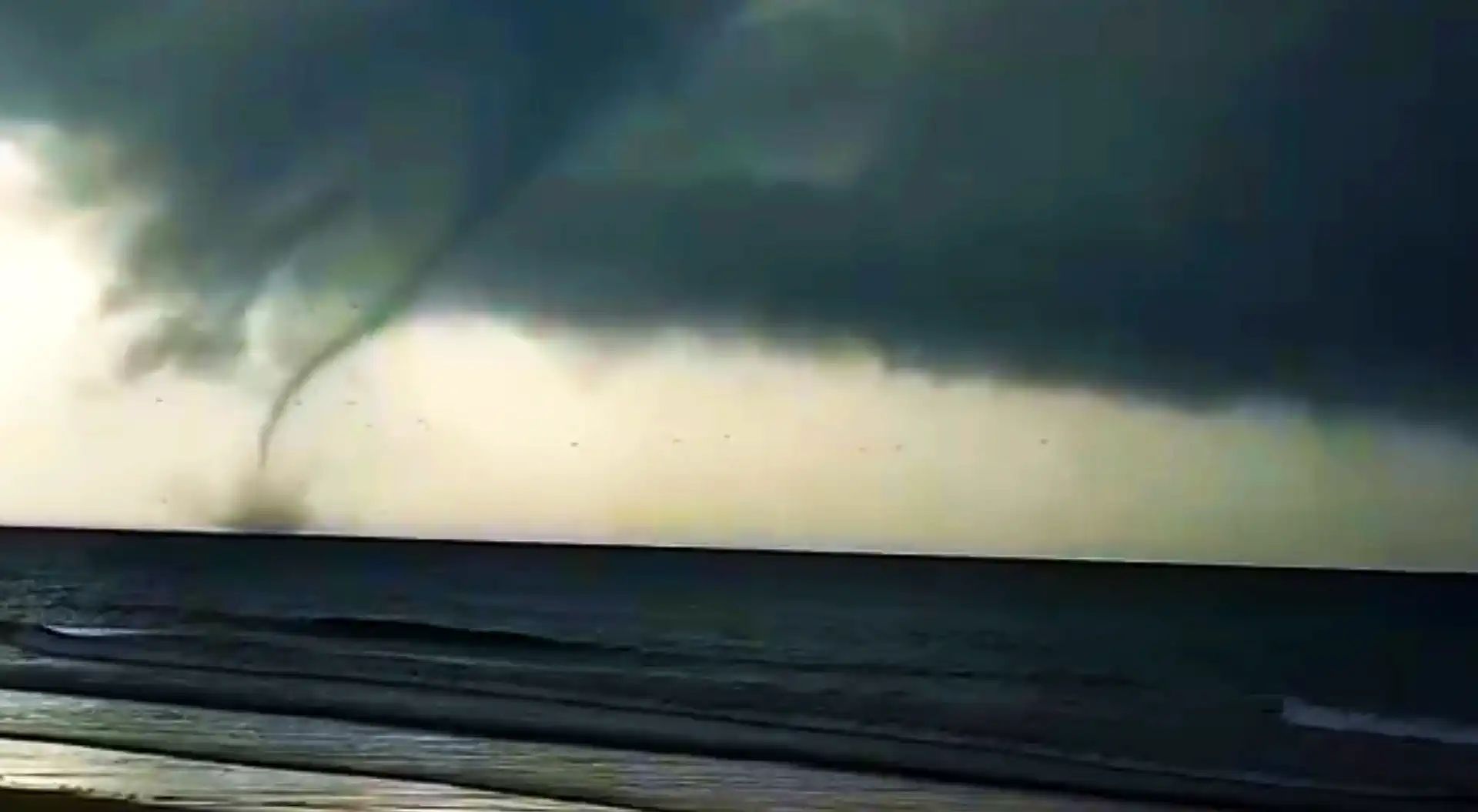
Unsettled weather conditions affected parts of the United Arab Emirates on December 18, 2025, as heavy rain swept across several emirates and a tornado-like funnel cloud was spotted over northern Ras Al Khaimah. Authorities issued public safety alerts and warned that further rainfall and sudden weather changes remain possible.
Funnel cloud spotted during intense convective activity
Harsh and unstable weather continued across parts of the UAE on Thursday, with a tornado-like funnel cloud observed over northern areas of Ras Al Khaimah. Videos shared by residents on social media showed a rotating funnel extending from storm clouds, forming offshore and over open land during periods of heavy rainfall.
Meteorologically, such funnel clouds are associated with strong convective updrafts inside towering cumulonimbus clouds. While not all funnel clouds reach the ground or develop into full tornadoes, their appearance signals a highly unstable atmosphere capable of producing sudden downpours, gusty winds and localized hazards.
Low-pressure system driving unstable conditions
According to forecasters, the unsettled weather is being driven by a low-pressure system over the Arabian Gulf combined with increased convective instability. As surface heating interacted with moist air and cooler air aloft, conditions became favorable for rapid cloud development and intense rainfall.
Winds were forecast to shift to an easterly direction and strengthen across northern and eastern parts of the country later in the day. This wind shift enhances moisture transport from the Gulf, increasing the likelihood of heavy showers and short-lived but intense weather episodes.
Rain spreads across multiple emirates
Beyond Ras Al Khaimah, rainfall was reported in several other emirates. In Dubai, residents received a public safety alert on their mobile phones at around 8:30 a.m., warning of unstable weather conditions. Rain began falling in parts of the city by early afternoon, leading to cooler temperatures and reduced visibility in some areas.
Such rainfall events are notable in the UAE, where precipitation is typically infrequent. When rain does occur, it can quickly overwhelm drainage systems, especially in urban areas, leading to water accumulation on roads and localized flooding.
A phenomenon seen before in Ras Al Khaimah
This is not the first time a tornado-like feature has been reported in Ras Al Khaimah. A similar funnel cloud was recorded in the emirate on August 30, 2021, during another period of unstable weather. While rare, these events highlight that severe convective phenomena can occasionally develop in the region under the right atmospheric conditions.
Climatologically, such occurrences are more likely during transitional seasons or when upper-level disturbances interact with warm, moist air near the surface, creating sharp vertical temperature gradients.
Public safety alerts and official guidance
Authorities urged residents to remain cautious during the wet and unsettled conditions. Motorists were advised to slow down, maintain a safe following distance and avoid stopping on roads to take photos or videos. Driving through flooded areas was strongly discouraged, as water depth can be difficult to judge and conditions can deteriorate rapidly.
Officials also reminded the public to follow updates from official channels and heed weather alerts, as sudden changes in wind, rainfall intensity and visibility are common during convective weather events.
Short-term forecast: more rain expected
Forecast guidance indicates that additional showers are likely later on December 18, with further rainfall expected from around 8 p.m. through to the morning hours of December 19. While widespread severe impacts are not anticipated, localized heavy rain and gusty winds remain possible, particularly in northern and eastern regions.
Meteorologists emphasize that although tornadoes remain rare in the UAE, the current pattern supports continued convective activity. Residents should remain weather-aware until conditions stabilize and the low-pressure system weakens or moves away from the region.
Monitoring an evolving weather situation
As the unsettled weather continues, authorities and forecasters will closely monitor radar and satellite data for signs of renewed convective development. For now, the key message remains one of caution rather than alarm: stay informed, avoid unnecessary travel during heavy rain, and follow official safety guidance.
The Founder and Chief Meteorologist at Pogodnik.com. With over 15 years of operational experience in synoptic analysis and climate forecasting, he specializes in storm tracking, magnetic storms, and atmospheric dynamics. A recognized expert in Ukraine’s meteorological sector, he maintains strategic collaborations with global agencies, including NOAA and ECMWF, to ensure high-precision data integration. His analytical reviews and scientific contributions are regularly featured in leading media outlets dedicated to weather science and environmental trends.