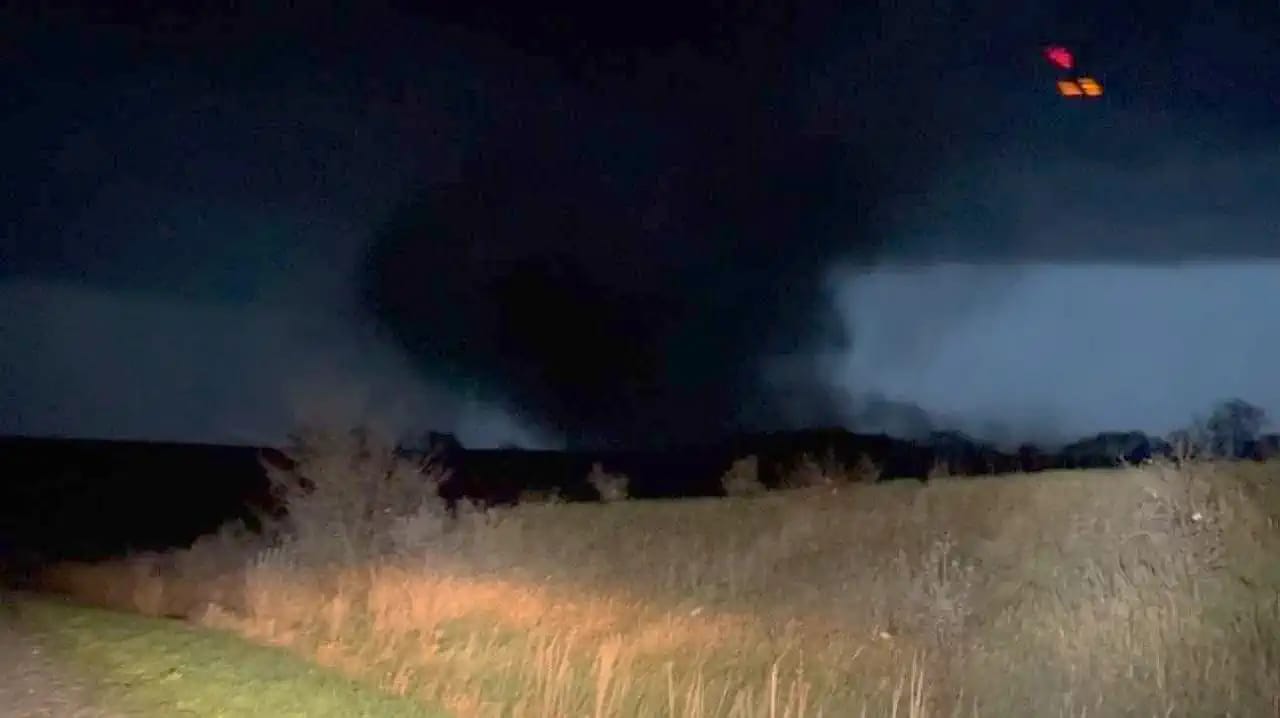
Key Takeaways: The National Weather Service (NWS) has completed ground damage surveys following the recent severe weather outbreak in the Central U.S. Officials confirmed a violent EF-3 tornado obliterated multiple homes north of St. Libory, Nebraska. Meanwhile, a separate storm system produced an EF-1 tornado in Ray County, Missouri, causing moderate structural and tree damage.
SUPERCELL OUTBREAK 🌪️: Severe weather bombarded Clearwater, Kansas on Monday night, producing heavy rainfall, damaging winds, large hail and powerful tornadoes. The National Weather Services reported that at least seven tornadoes ripped across the region.#supercell#tornado… pic.twitter.com/giLKpxRfqB
Following a volatile outbreak of severe thunderstorms across the Central Plains, specialized damage survey teams from the National Weather Service (NWS) were dispatched to assess the destruction. By analyzing the debris field, structural failures, and tree damage patterns, meteorologists have officially classified the intensity of two major tornadoes.
The ground findings confirmed what radar signatures had previously suggested: these supercells were capable of producing long-track, highly destructive twisters.
🚨 Nebraska: Devastating EF-3 Tornado Near St. Libory
The most catastrophic damage was documented in Nebraska. According to the NWS assessment, an intense supercell spawned a violent tornado categorized as an EF-3 on the Enhanced Fujita Scale.
Damage Report: The twister caused critical destruction along its path. Multiple residential homes were completely leveled, roofs were torn off, outbuildings were obliterated, and massive trees were snapped or uprooted.
Meteorologists noted that the tornado had a significant damage swath, maintaining ground contact long enough to carve a visible scar through the rural landscape.
While Nebraska faced EF-3 winds, a separate storm cell severely impacted Missouri. The NWS survey team officially confirmed that a tornado touched down in Ray County.
Category: EF-1 (Moderate intensity).
Estimated Wind Speeds: 86–110 mph (138–177 km/h).
Damage Report: The EF-1 tornado caused notable damage to the local tree canopy, uprooting large trees, snapping power lines, and removing roofing materials from barns and residential garages.
🔬 Expert Meteorological Analysis: What Fueled the Storms?
The Central United States, traditionally known as Tornado Alley, frequently sees volatile weather in May. However, the thermodynamic environment leading to these specific tornadoes was exceptionally primed.
Forecaster Insight: The collision of a deep, negatively tilted upper-level trough with rich, moist air flowing northward from the Gulf of Mexico resulted in extreme convective available potential energy (CAPE). Furthermore, intense low-level wind shear provided the necessary helicity (spin), allowing updrafts to rapidly organize into tornadic mesocyclones.
Emergency management officials remind residents that tornado season is far from over. The atmosphere remains dynamic, and staying weather-aware with reliable radar apps and NOAA weather radios is crucial for safety.
This article is based on official ground survey reports released by the National Weather Service (NWS). Always adhere to warnings from local emergency management during severe weather outbreaks. Stay updated with real-time radar using the Pogodnik app.
The Founder and Chief Meteorologist at Pogodnik.com. With over 15 years of operational experience in synoptic analysis and climate forecasting, he specializes in storm tracking, magnetic storms, and atmospheric dynamics. A recognized expert in Ukraine’s meteorological sector, he maintains strategic collaborations with global agencies, including NOAA and ECMWF, to ensure high-precision data integration. His analytical reviews and scientific contributions are regularly featured in leading media outlets dedicated to weather science and environmental trends.