Tropical Storm Alvin Looms in the Eastern Pacific: Could It Escalate into a Ferocious Hurricane Threatening Mexico?

A menacing disturbance in the Eastern Pacific is poised to become Tropical Storm Alvin, the first named storm of the 2025 Western Hemisphere hurricane season. Lurking just hundreds of miles south of Acapulco, Mexico, this brewing beast could unleash chaos if it intensifies into a hurricane as early as Thursday. With the potential for destructive winds, torrential rains, and life-threatening surf, the question on everyone’s mind is: Will Alvin strike Mexico’s vulnerable Pacific coast?
A Storm Taking Shape
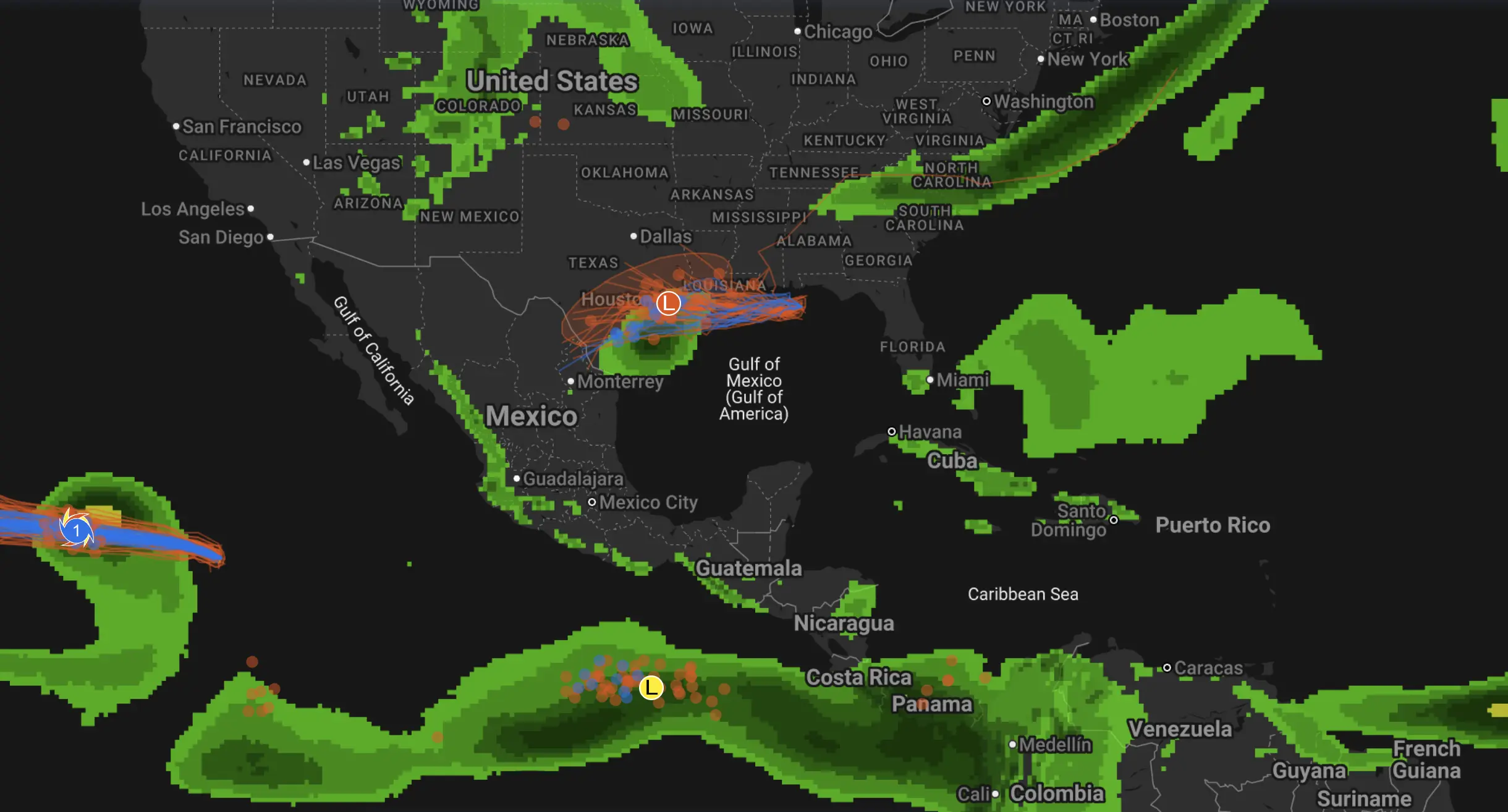
As of this morning, satellite imagery reveals a swirling mass of thunderstorms gaining strength, with its center positioned several hundred miles south of Acapulco. Vivid red hues on satellite maps highlight the storm’s most intense convection, while tightly packed pressure contours signal a system itching to organize. Moving west-northwest, Alvin is feeding off warm Pacific waters, priming it for a potential upgrade to hurricane status within days.
Could this be the next Hurricane Otis? The memory of 2023’s catastrophic Category 5 storm in Acapulco looms large, and residents along Mexico’s Pacific coast are on high alert.
The Path of Uncertainty
Computer models are sounding the alarm: Alvin is expected to continue its west-northwest track for the next 24–48 hours before possibly making a sharp northward turn. If it builds a robust core of thunderstorms, forecasters warn it could reach hurricane strength by Thursday, packing winds of at least 74 mph. But the real drama unfolds this weekend. Will Alvin fizzle out over cooler waters and hostile wind shear, or will it take a dangerous turn northeast, threatening Mexico’s coastline in a weakened but still destructive state?
Impacts to Watch
Even if Alvin spares the coast a direct hit, its wrath will be felt. Expect:
High surf and rip currents hammering Mexico’s Pacific coast west of Acapulco by late this week.
Torrential rains drenching areas north and east of the storm’s track, raising the risk of flash flooding and mudslides.
Potential for widespread disruption if Alvin strengthens and veers closer to land.
The Season Awakens
The Eastern Pacific hurricane season, which kicked off on May 15, is wasting no time making its presence known. While many storms in this basin drift harmlessly into the open ocean, history reminds us of the devastation possible when they don’t—like 2023’s Hurricane Hilary, which soaked the Desert Southwest, and Otis, which left Acapulco reeling. Alvin’s arrival signals that 2025 could be another turbulent year.
2025 Hurricane Season
The 2025 hurricane season has officially begun, and its first manifestation was Tropical Storm Alvin, which formed in the eastern Pacific Ocean just two weeks after the season started on May 15. While the Atlantic hurricane season, which begins on June 1, has yet to show any activity, Alvin’s appearance in the eastern Pacific Ocean reminds us that nature does not follow a strict schedule. This early storm sets the tone for a season that is predicted to be intense and unpredictable.
Seasonal forecasts
According to preseason forecasts by the National Oceanic and Atmospheric Administration (NOAA), the eastern Pacific Ocean is expected to see 15 to 18 named storms in 2025, of which 7 to 9 could become hurricanes and 3 to 5 could reach major hurricane status (Category 3 and above). These estimates are based on an analysis of sea surface temperatures, wind shear levels, and climate phenomena such as El Niño or La Niña.
This year, a weak La Niña is expected, a phenomenon in which colder-than-normal waters in the central and eastern Pacific Ocean reduce wind shear, creating favorable conditions for storm formation. This could lead to increased activity in the eastern Pacific, while the Atlantic may respond differently.
Historical context
The eastern Pacific Ocean is often the scene of early storms. For example, in 2023, Hurricane Hilary formed in late May and later affected the southwestern United States, while Hurricane Otis, a Category 5 storm, devastated Acapulco in October of that year. The formation of Alvin in late May 2025 is not an anomaly, but it underscores that the peak of the season (usually July through September) is only part of the picture. History shows that even early storms can be powerful and destructive.
Naming system
Tropical storms and hurricanes are named from a list approved by the World Meteorological Organization (WMO). In 2025, for the eastern Pacific Ocean, the list begins with Alvin, followed by Barbara, Cosme, Delilah, and others. These names are repeated every six years, but the names of particularly destructive storms, such as Otis, are removed from the list and replaced.
Looking ahead
The arrival of Alvin may herald an active season, but it is still difficult to predict how it will develop. Even a single storm can change the outlook for the season, as was the case with Otis in 2023. Residents of Mexico’s Pacific coast should be on alert: Alvin already poses a threat of high waves, flash floods, and landslides. The 2025 hurricane season is just beginning, and preparedness remains the key to safety.
Stay vigilant, America! Keep your eyes on Alvin as it churns through the Pacific. Will it fade into obscurity, or become the season’s first monster? Check back for updates as this storm’s story unfolds.