Europe’s Heat Dome Turns Brutal: Romania Faces 41°C, Slovakia Hits 42°C and 43°C Is Forecast for the Balkans
Europe has become the hottest focus of the global heat crisis in early August 2026. A persistent heat dome is driving temperatures above 40°C (104°F) from Central Europe into the Balkans and Eastern Europe, while fresh temperature records, red heat alerts, drought, power restrictions and extreme wildfire danger spread across the continent.
- Romania: RSOE reports an expanded extreme-heat emergency, with a red alert in the west and temperatures up to 41°C.
- Slovakia: a new national high of about 42°C was reported on August 6 after records had already fallen earlier in the week.
- Austria: Bad Deutsch-Altenburg reached 41.2°C, the country’s highest temperature on record.
- Hungary: temperatures have been running around 40–42°C, while extreme heat and low Danube levels have forced major energy-saving measures.
- Czechia: RSOE reports fresh record-breaking heat; the country had already set a national all-time record of 41.9°C in late June.
- Italy: all 27 cities in the national heat-health warning system were placed on the highest red alert on August 6.
- Forecast: the heat dome remains focused on Eastern Europe and the Balkans before weakening, while models suggest another strong ridge could rebuild over Western Europe next week.
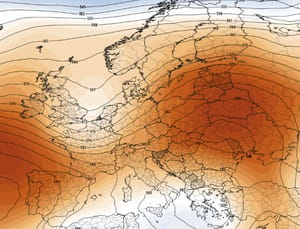
The current Europe heatwave 2026 is being driven by a high-amplitude upper ridge and an Omega-block pattern. Hot, dry air has surged north from North Africa and become trapped beneath the persistent high-pressure system. Severe Weather Europe says temperatures in the Po Valley and Pannonian Basin have been capable of reaching 40–43°C, with overnight lows of 22–26°C in major urban areas.

Heat Dome Europe: Why the Air Is Getting So Hot
A heat dome acts like a lid over the atmosphere. Air sinks beneath a strong upper-level ridge, compresses and warms, while cloud development is suppressed. When the pattern remains nearly stationary for several days, soil and cities heat continuously and nighttime cooling becomes weaker.
This week, the hottest air shifted from Germany, Czechia and Austria toward Hungary, Slovakia, Croatia, Serbia, Romania and Ukraine. By Thursday and Friday, the core of the heat dome was centered over Eastern Europe and the northern Balkans.
Romania Heatwave: Red Alert Extended as Temperatures Reach 41°C
Romania is one of the newest hotspots in the eastward-moving heat dome. The RSOE Emergency and Disaster Information Service listed an August 5 heatwave event describing an expansion of extreme heat across Romania, an extended red alert in western areas and temperatures up to 41°C.
The heat is also colliding with drought and energy stress. Romanian cities have dimmed public lighting and some industrial users have reduced electricity consumption. Low Danube levels have complicated cooling-water management for the country’s nuclear power system, adding infrastructure risk to the public-health emergency.
Hungary Heat Record: 40–42°C and a Power Crisis on the Danube
RSOE also listed Hungary among Europe’s active heatwave emergencies, reporting another broken heat record and describing the country as one of the hottest in Europe. By August 6, temperatures in Hungary and neighboring Romania were running around 40–42°C.
The consequences now go far beyond uncomfortable weather. Record-low water levels on the Danube sharply reduced cooling capacity at Hungary’s Paks nuclear power plant, forcing major output reductions. Budapest switched off decorative lighting at Parliament, Buda Castle and Chain Bridge, while the government urged households and major companies to cut electricity use.
Budapest also recorded its warmest night on record, with the temperature falling only to about 28°C. Such tropical nights are especially dangerous because the body and buildings have almost no opportunity to recover from daytime heat.
Czech Heatwave: Records Fall Again After a 41.9°C National High
RSOE reported a fresh record-breaking Czech heatwave on August 5. Czechia had already rewritten its national temperature history earlier this summer: the Czech Hydrometeorological Institute confirmed 41.9°C at Doksany on June 28 as the country’s new all-time maximum.
The August event adds another layer of stress. Fire-weather severity in Czechia by early August was reported to be more than 50% worse than the previous record for this time of year, highlighting how prolonged heat and drought can create danger even when daily temperatures later begin to fall.
Slovakia and Austria Break National Temperature Records
Slovakia: around 42°C
Slovakia has broken its national heat record repeatedly this summer. On August 5, Kamenica nad Hronom reached 41.4°C. A day later, the Slovak hydrometeorological agency reported a new high of about 42°C at Dolné Plachtince.
The country also recorded exceptionally warm nights, worsening heat stress and pressure on water resources.
Austria: 41.2°C
Bad Deutsch-Altenburg near the Slovak border reached 41.2°C, the highest temperature ever measured in Austria. The country is simultaneously dealing with severe drought; rainfall during the first half of the year was well below normal.
Italy Places All 27 Major Cities on Red Heat Alert
Italy placed all 27 cities monitored by its national heat-health surveillance system on the highest red alert on August 6 — the first time this year that the entire network was simultaneously under the maximum warning level.
The alert stretches from Trieste in the northeast to Palermo in Sicily. In parts of Emilia-Romagna, temperatures have exceeded 42°C. Rome has expanded cooling measures at major tourist sites, including evening opening hours and misting fans at the Colosseum.

Europe Heatwave Forecast: Where the 40–43°C Core Moves Next
The heat dome has already shifted from Central Europe into Eastern Europe and the Balkans. Severe Weather Europe expects the ridge to weaken over the coming weekend, but there is a new risk: another strong high-pressure ridge may rebuild over southwestern, western and central Europe next week.
| Region | Recent / peak heat | Next trend | Main risk |
|---|---|---|---|
| Romania | Up to 41°C | Extreme heat persists before gradual frontal relief | Health alerts, drought, electricity stress |
| Hungary / Slovakia | 40–42°C | Heat remains severe before ridge weakens | Tropical nights, Danube drought, power generation |
| Austria / Czechia | Record-breaking heat | Gradual moderation from the west | Drought, wildfire weather, river stress |
| Italy / northern Balkans | 40–43°C in hottest lowlands | Heat remains intense through the short term | Red health alerts, wildfires, tourism disruption |
| Western Europe next week | Potential renewed major heatwave | Models suggest warming from Portugal and Spain toward France, the Alps and possibly the British Isles | New heat alerts, wildfire danger, drought |
Another Heat Dome May Return to Western Europe Next Week
The next phase of the pattern could reverse the geography of the heatwave. Mid-range ensemble trends suggest a new ridge may build from southwestern Europe into France and the Alpine region, potentially pushing another significant heatwave toward Portugal, Spain, France and later the British Isles.
This forecast is still less certain than the current Central and Eastern European heat, but it is important because the continent has had very little time to recover. Drought, warm rivers, dry forests and overheated urban infrastructure can amplify the impact of the next heat surge.
Extreme Heat Is Disrupting Europe’s Energy and Transport Systems
- Hungary: low Danube levels reduced cooling capacity at the Paks nuclear plant and triggered emergency power-saving measures.
- Romania: cities and industry have reduced lighting and electricity demand while authorities manage cooling-water shortages.
- Poland: critically low Vistula River levels forced the Kozienice and Połaniec power plants offline, removing about 1.3 GW from the grid.
- Germany: low Rhine water levels are disrupting inland shipping and increasing freight costs.

Wildfire Risk Rises as Half a Million Hectares Burn Across the EU
Hot, dry and windy conditions have primed vegetation across much of Europe. About half a million hectares have burned in the EU since the start of 2026, with the largest losses concentrated in Spain and France. Fire-weather conditions are now reaching record severity in parts of Central Europe and the Balkans.
Check the Pogodnik live wildfire map for recent satellite fire detections and wind direction before traveling through high-risk areas.
How to Stay Safe During a 40°C+ Heatwave
- Avoid strenuous outdoor activity during the hottest part of the day.
- Drink water regularly and avoid relying on thirst as your only warning.
- Use shutters, curtains or blinds before indoor temperatures rise.
- Ventilate homes overnight and around sunrise when outdoor air is cooler.
- Wear loose, light clothing and protect your head and skin from direct sun.
- Never leave children, older adults or pets in parked vehicles.
- Check on people living alone, especially during tropical nights.
Heat exhaustion can cause heavy sweating, weakness, headache, nausea and dizziness. Confusion, fainting, very hot skin or loss of consciousness can indicate heat stroke and require immediate emergency care.
Extreme Heat Alerts and Wildfire Map in the Pogodnik App
The Pogodnik Weather Forecaster app provides hourly temperature forecasts, severe-weather and heat alerts, wind direction, UV index, air quality and a wildfire map. It is useful for checking when the hottest air, smoke or a frontal change will reach your location.
Explore the Pogodnik Weather App
Download Pogodnik for Android
Europe Heatwave 2026: Frequently Asked Questions
How hot is Romania during the August heatwave?
RSOE reported temperatures up to 41°C and an extended red alert in western Romania.
What is the new temperature record in Slovakia?
Slovakia reached about 42°C on August 6 after already breaking its national record earlier in the week.
What is Austria’s all-time temperature record?
Bad Deutsch-Altenburg reached 41.2°C on August 5, the highest temperature ever officially recorded in Austria.
Why is the heatwave causing power problems?
Drought has pushed river levels extremely low. Nuclear and thermal power plants need large amounts of water for cooling, so low river flow can force operators to reduce output or shut units down.
Could another heatwave hit Western Europe next week?
Medium-range ensemble guidance suggests another ridge could develop from Spain and Portugal toward France, the Alps and possibly the British Isles, although the exact position remains uncertain.
Where can I see active wildfires in Europe?
The Pogodnik wildfire map shows recent satellite heat detections and wind direction. Always combine the map with official evacuation and emergency information.