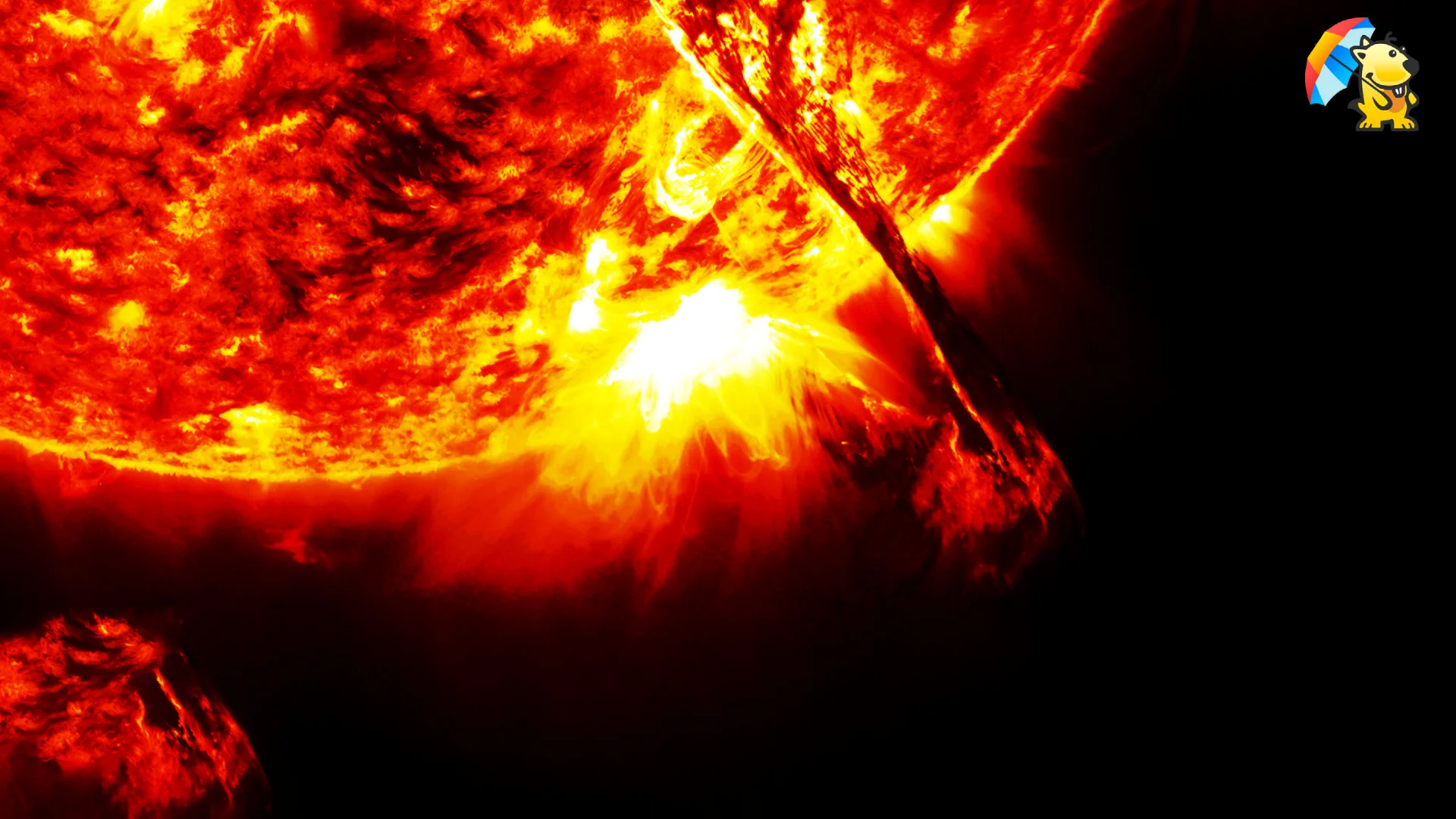
Sun Plasma Headed for Earth: March 19 Geomagnetic Storm to Spike to “Kp 6.33” (G2 Level)
The Sun is reminding everyone who runs space weather. After activity from active region AR 4392, a coronal mass ejection (CME) has been launched toward Earth. NOAA‘s official guidance flags March 19 as the main impact window, with geomagnetic activity peaking near Kp 6.33 — a G2 (Moderate) storm on the NOAA scale.

What happened on the Sun
The setup is straightforward: an active region produced an energetic event, and subsequent analysis confirmed a CME with an Earth-directed component. For Earth’s geomagnetic response, the key is not the headline flare class — it’s the incoming plasma parameters at arrival: speed, density, and especially the interplanetary magnetic field orientation (Bz). Sustained negative Bz is the classic “door opener” that lets energy couple efficiently into Earth’s magnetosphere.
Why March 19 is the main risk window
NOAA/SWPC issued a G2 geomagnetic storm watch for March 19 tied to the expected CME arrival. In SWPC’s 3-day geomagnetic outlook, the maximum predicted 3-hour Kp for the 18–20 March window is listed as 6.33 — a clear signal for a G2 peak on the 19th.

When the peak hits (Kyiv time)
NOAA publishes Kp in 3-hour UTC blocks. Kyiv time is UTC+2, so add two hours. The strongest window on March 19 is expected in the morning:
- 02:00–05:00 — Kp 1.67 (quieter background, but conditions may start shifting)
- 05:00–08:00 — Kp 5.33 (storm-level activity begins)
- 08:00–11:00 — Kp 6.33 (main peak, G2 level)
- 11:00–14:00 — Kp 5.67 (still stormy)
- 14:00–17:00 — Kp 4.33 (dropping toward an “unsettled” geomagnetic background)
- later in the day, “waves” of Kp 3–4 remain possible before a full settle-down
Reminder: this is a forecast. The real intensity you feel (and what instruments record) depends on the CME’s structure and how long Bz stays negative during the impact.
What it means in real life
For how you feel. Around Kp 6, some people report headache, fatigue, irritability, pressure swings, or a “foggy” morning. If you’re sensitive, don’t stack the most stressful tasks into the peak window — keep sleep, hydration, and pacing under control, and go easy on caffeine.
For tech and communications. G2 impacts are typically most pronounced at higher geomagnetic latitudes, but mid-latitudes can still see episodes of degraded HF conditions and minor navigation/radio quirks if the CME’s magnetic field couples efficiently.
Simple prep for March 19
If you’re meteosensitive: plan a calmer morning, avoid overexertion, hydrate, and keep your routine steady. If you have chronic conditions, stick to your normal monitoring and avoid “experiments” with loads or stimulants.
And don’t guess — track updates during the day. Geomagnetic storms are dynamic: the same “Kp number” can feel different depending on timing, Bz behavior, and how long the disturbance persists.