Arctic Cold Wave Grips Northern Europe: Frozen Lapland Airports and a New Blow to Transport
In mid-January 2026, a powerful Arctic cold wave locked into Northern Europe. Extreme low temperatures froze Lapland airports, triggered widespread flight delays and cancellations, disrupted rail operations, and created severe challenges for road traffic across Scandinavia and the northern tier of the continent.
A new phase of Arctic intrusion
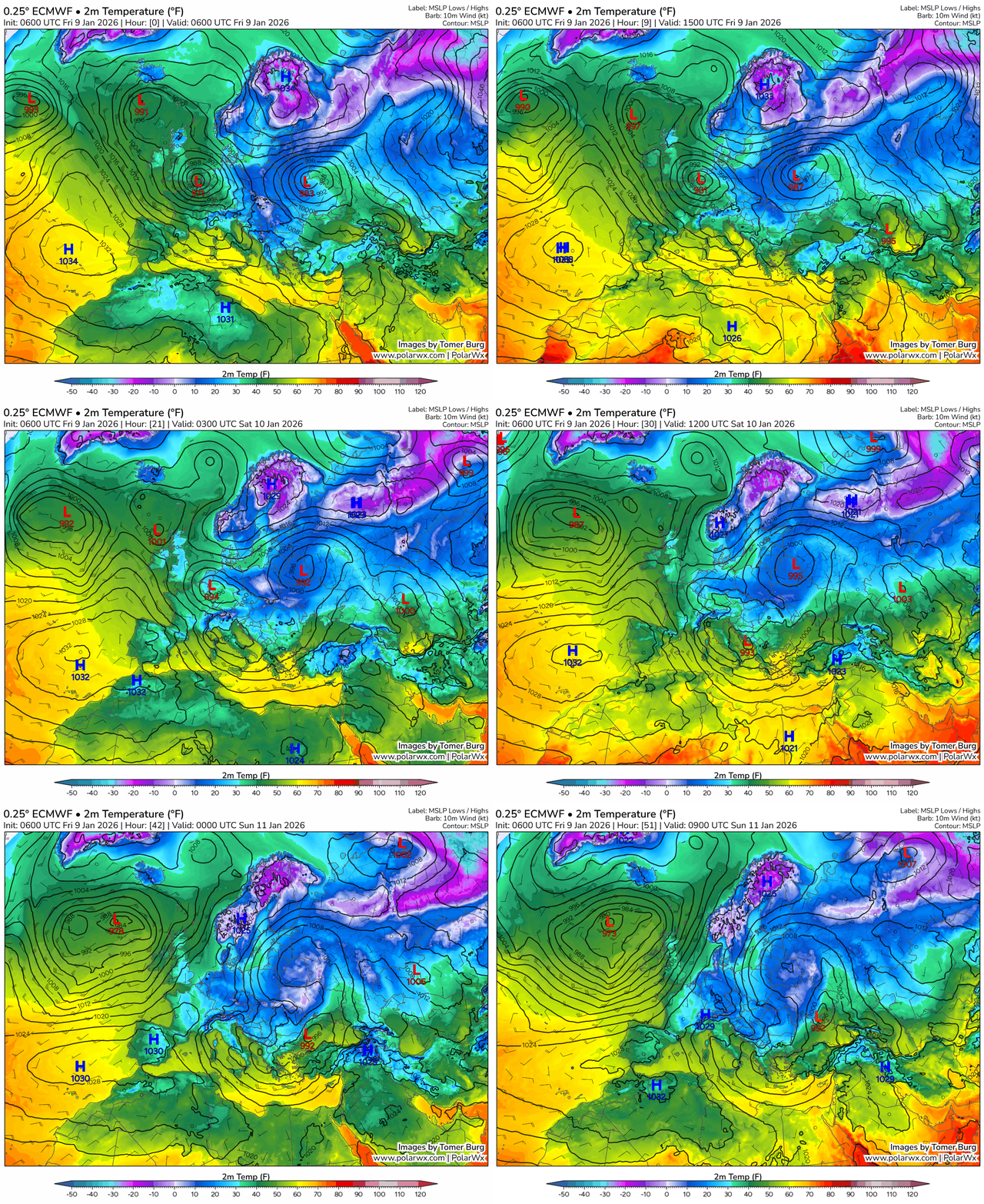
Following Storm Goretti and the earlier cold blast, Europe entered another high-impact winter episode. Between 11–13 January 2026, an Arctic air mass shifted farther north and northeast, targeting Scandinavia and sub-Arctic regions. Meteorologists note this phase as a natural continuation of the broader circulation shift that anchored polar air over Northern Europe.
Northern Finland, Sweden, and Norway were hit hardest, with cold that was both prolonged and intense enough to disrupt critical transport nodes.
Lapland: airports under ice
Across Finnish Lapland, temperatures fell below −30 °C in places, forcing extended aircraft heating and maintenance procedures and rendering normal operations impractical. Several regional airports temporarily suspended operations or sharply reduced schedules.
Passengers faced long delays, cancellations, and limited rerouting options. For peak-season winter tourism, fast-changing weather and constrained slot availability turned routine trips into logistical stress tests.
Northern Europe: a chain reaction of transport disruptions
Frozen Lapland airports were only one link in a larger chain. The cold wave spread into northern Sweden and Norway, where sub-zero temperatures and icing affected aviation and rail. Trains ran at reduced speeds or were canceled outright as switches and overhead lines came under heavy thermal stress.
Road transport also suffered. Persistent cold and snowpack produced compacted snow and ice on highways, sharply raising accident risk. In mountainous and sparsely populated areas of Scandinavia, some communities experienced temporary isolation.
Energy infrastructure under strain
Power and heat demand surged across Northern Europe. Utilities reported systems running near capacity. Localized blackouts occurred in a few areas due to line faults and equipment overloads.
Remote northern settlements were of particular concern as repairs were slowed by weather, distance, and limited access.
Why the cold proved so persistent
January 2026 featured a blocked circulation regime. High pressure over the North Atlantic and Greenland limited maritime air intrusions into the continent’s interior. As a result, Arctic air masses remained quasi-stationary over Northern Europe.
Limited daytime heating and the short photoperiod suppressed thaw potential. A widespread snow cover amplified radiative cooling and kept temperature anomalies negative.
Observed temperatures and conditions
In Lapland, overnight lows frequently dropped below −30 °C, with daytime readings often holding near −20…−25 °C. Northern Sweden and Norway saw −20…−28 °C, often with light winds—ideal for intense radiative cooling.
Farther south across central Scandinavia, −10…−18 °C was common—still cold enough to trigger significant and sustained transport challenges.
Social impacts and daily life
Schools in some districts moved online or closed temporarily. Municipal services intensified road clearing and prioritized medical access.
Logistics dominated concerns in remote areas: deliveries of fuel, food, and medicines were complicated by conditions, and any technical failure carried outsized consequences.
Tourism and the winter season at risk
Lapland—one of Europe’s flagship winter destinations—faced cascading impacts. Canceled flights, closed roads, and mobility restrictions undermined visitor plans and strained local businesses.
Authorities emphasized safety and urged travelers to rely on official updates and avoid risk-taking during the peak of the cold spell.
What comes next
Forecasters expect a gradual easing of the Arctic air mass over the coming days, but no abrupt thaw. Even with modest warming, overnight freezes will persist, and transport networks will need time to normalize.
Northern Europe will remain at elevated risk until the large-scale flow pattern relaxes and allows milder Atlantic air to penetrate the region.
The mid-January 2026 Arctic outbreak posed a major test for transport, energy, and everyday life across Northern Europe. Frozen Lapland airports, rail and road disruptions, and heightened grid loads underscore how even well-prepared regions remain vulnerable to long-duration extreme cold.
This episode reinforces that winter 2026 is trending more extreme than average, and the downstream impacts of Arctic intrusions can extend far beyond their initial footprint.
The Founder and Chief Meteorologist at Pogodnik.com. With over 15 years of operational experience in synoptic analysis and climate forecasting, he specializes in storm tracking, magnetic storms, and atmospheric dynamics. A recognized expert in Ukraine’s meteorological sector, he maintains strategic collaborations with global agencies, including NOAA and ECMWF, to ensure high-precision data integration. His analytical reviews and scientific contributions are regularly featured in leading media outlets dedicated to weather science and environmental trends.