The Wrath of the Sun: G4 – A Severe Geomagnetic Storm Threatens Earth
June 1, 2025 — The heavens are ablaze with fury, and Earth stands in the crosshairs of a cosmic onslaught. The U.S. Space Weather Prediction Center (SWPC) has issued a dire G4 – Severe geomagnetic storm watch for June 2, 2025, following a violent eruption on the Sun’s surface—a long-duration M8.1 solar flare from Active Region 4100 that unleashed a colossal coronal mass ejection (CME) now barreling toward our planet.
This celestial juggernaut, detected at 00:05 UTC on May 31, 2025, promises a dazzling display of auroras and a cascade of potential disruptions that could shake the foundations of our technology-dependent world. As the CME races toward Earth, expected to strike late on June 1, scientists, governments, and industries brace for a storm that could rival some of the most intense geomagnetic events in modern history.

A Star’s Fury Unleashed: The Origins of the Storm
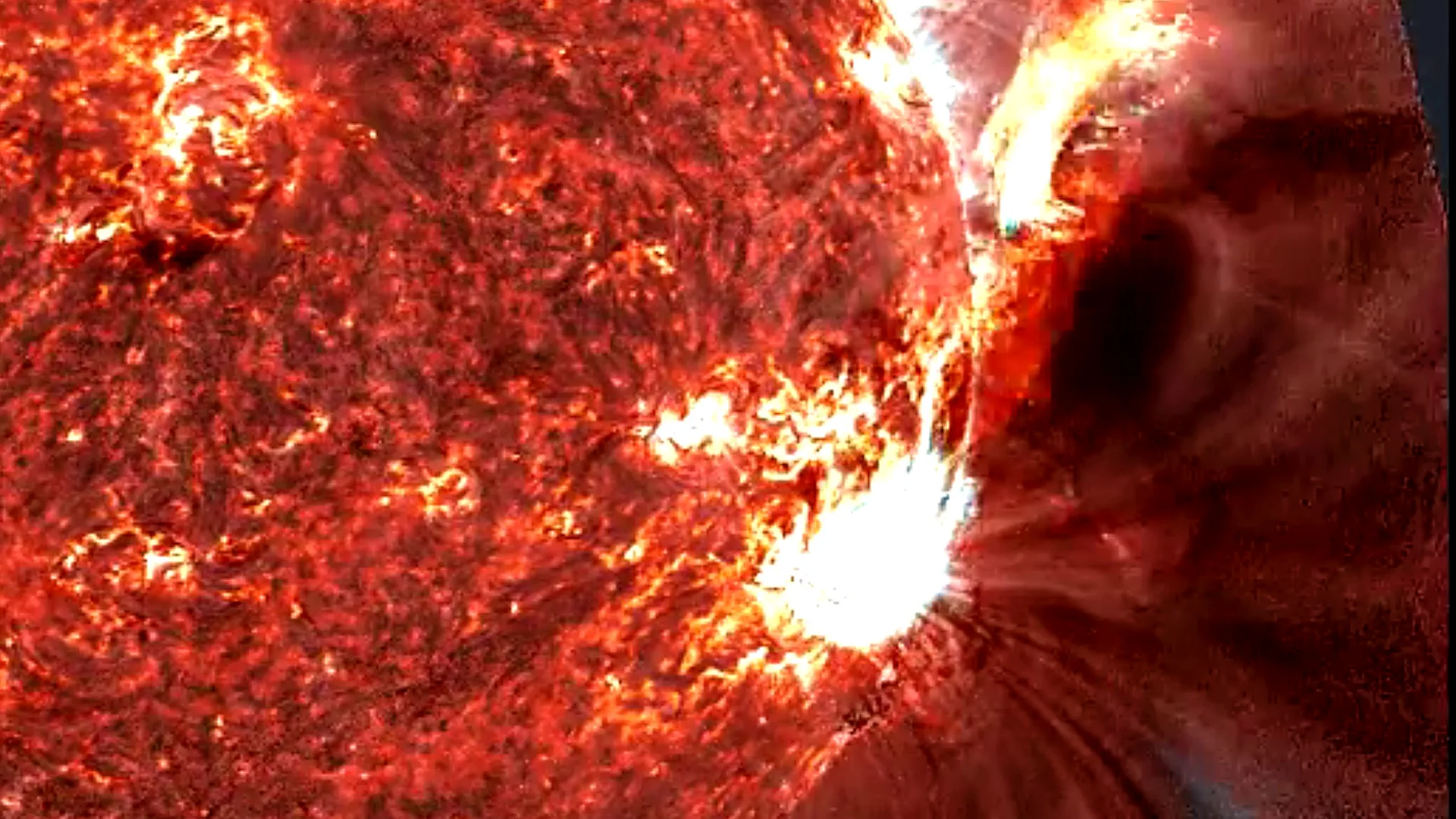
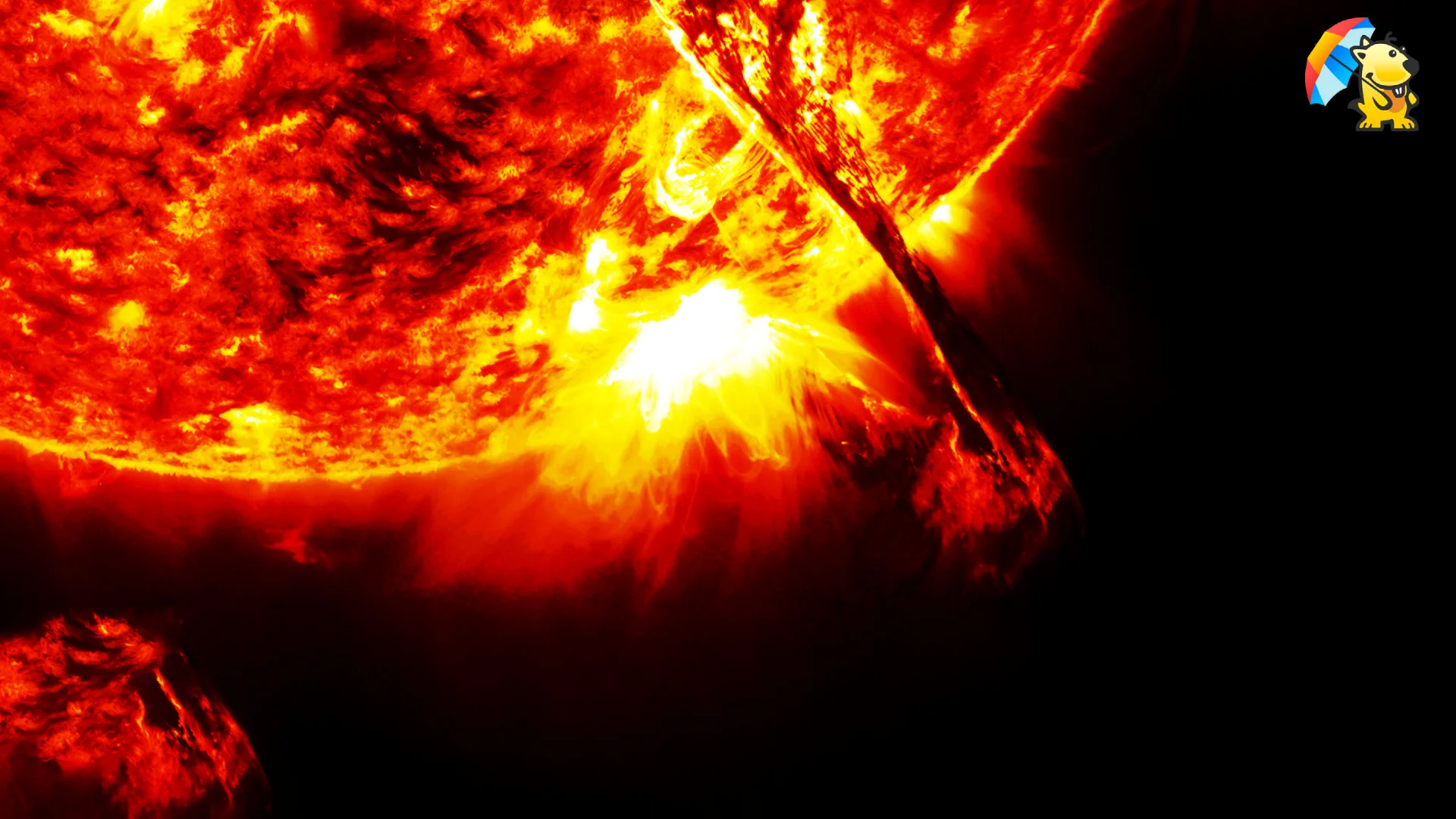
The Sun, our life-giving star, is a restless titan, its surface a roiling cauldron of plasma and magnetic energy. On May 31, 2025, at 00:05 UTC, Active Region 4100—a volatile cluster of sunspots—erupted in a spectacular M8.1 solar flare, one of the most powerful of its class. This long-duration event, spanning from 23:31 UTC on May 30 to 01:32 UTC on May 31, was captured in vivid detail by NASA‘s Solar Dynamics Observatory (SDO) and the ESA/NASA SOHO LASCO coronagraph.
Far from an ordinary outburst, this flare produced a full halo coronal mass ejection—a massive cloud of charged particles and magnetic fields now hurtling toward Earth at an estimated velocity of 1,938 km/s, as indicated by a Type II Radio Emission detected during the event.
The flare’s intensity was underscored by a 10cm Radio Burst (TenFlare) lasting 102 minutes with a peak flux of 1,100 sfu, signaling significant radio noise that could interfere with sensitive receivers, including radar, GPS, and satellite communications. Additionally, a Type IV Radio Emission, lasting nearly five hours from 00:15 UTC to 05:08 UTC, confirmed the eruption’s magnitude, as such emissions are typically associated with major solar events and strong CMEs.
Model forecasts, including those from the University of Reading and SWPC’s WSA-Enlil solar wind prediction, confirm the CME’s Earth-directed trajectory, with impact expected late on June 1, setting the stage for a geomagnetic storm of extraordinary proportions.
Active Region 4100 has been a relentless source of solar activity, producing multiple M-class flares in recent days, including an M8.9 flare on May 25. Its volatility, combined with elevated solar wind speeds from a coronal hole high-speed stream, has kept Earth’s geomagnetic field in a state of unrest. Now, with this powerful CME approaching, the planet faces a cosmic tempest that could reshape our technological and natural landscape.

The Fury of a G4 Storm: Impacts and Risks
A G4 – Severe geomagnetic storm is a rare and formidable event, with impacts primarily affecting regions poleward of 45 degrees Geomagnetic Latitude but capable of rippling across mid-latitudes. SWPC forecasters predict that geomagnetic storm conditions could reach G4 levels on both June 1 and June 2, subsiding to G2 – Moderate levels by June 3. The potential consequences are profound, threatening the infrastructure that underpins modern society.
Power grids face significant risks, with widespread voltage control problems that could trigger protective systems to mistakenly trip critical assets, potentially leading to blackouts or equipment damage. Induced currents in pipelines could intensify, challenging energy infrastructure. Satellites in low Earth orbit may experience increased drag, complicating their orbits, while surface charging could disrupt spacecraft operations and tracking.
High-frequency (HF) radio communications, essential for aviation, maritime, and amateur radio operators, may become sporadic or completely blacked out, particularly over the Pacific Ocean, where radio emissions were most degraded during the flare. GPS and satellite navigation systems, relied upon by industries from precision agriculture to aviation, could be degraded or inoperable for hours, posing challenges for farmers, pilots, and drone operators.
Yet, amidst this chaos, the cosmos offers a breathtaking spectacle: auroras. These shimmering curtains of light, caused by charged particles colliding with Earth’s atmosphere, may be visible as far south as Alabama and northern California. For those in high and mid-latitudes, the night sky could transform into a vibrant tapestry of greens, purples, and reds—a rare opportunity to witness Earth’s magnetic dance with the Sun. But this beauty comes with a warning: the same forces that paint the sky could wreak havoc on our technological infrastructure.
A Minor Prelude: The S1 Solar Radiation Storm
The geomagnetic storm is not the only consequence of the Sun’s recent outburst. At 17:00 UTC on May 31, an S1 – Minor solar radiation storm began, triggered by the same M8.1 flare. Proton flux counts surged as high-energy particles bombarded Earth’s atmosphere, reaching the S1 threshold by 17:00 UTC. While S1 events are the least severe on NOAA‘s solar radiation storm scale, they are not without impact. Shortwave radio users in polar regions have reported brief signal fades at lower frequencies, a nuisance for polar radio operators and HF communication users.
Unlike the geomagnetic storm, the S1 event poses minimal risk to satellites, aviation, or ground-based infrastructure. For most, it will pass unnoticed, a quiet prelude to the more dramatic geomagnetic storm on the horizon. However, the persistence of elevated proton levels suggests that solar activity remains heightened, with the potential for additional radiation storms if Active Region 4100 continues its fiery outbursts.
The Science of Solar Fury
To grasp the gravity of this event, one must delve into the science of solar activity. The Sun operates on an approximately 11-year cycle, and we are currently near the peak of Solar Cycle 25, a period marked by heightened sunspot activity, flares, and CMEs. Active Region 4100, a complex magnetic structure, has been a focal point for forecasters due to its propensity for producing powerful flares. The M8.1 flare, while not as intense as an X-class event, was significant due to its long duration and the full halo CME it produced—a clear indicator of its Earth-directed trajectory.
Coronal mass ejections are clouds of plasma and magnetic fields ejected from the Sun at speeds of hundreds to thousands of kilometers per second. When these clouds collide with Earth’s magnetosphere, they can compress and distort the planet’s magnetic field, triggering geomagnetic storms. The severity of these storms depends on the CME’s speed, density, and magnetic orientation.
A southward-oriented magnetic field, for instance, can align with Earth’s magnetic field, allowing more energy to penetrate and intensify the storm’s effects. The SWPC’s WSA-Enlil model predicts a dense cloud of particles enveloping Earth, with effects lingering for days.
Dr. Tamitha Skov, a renowned space weather physicist, captured the stakes vividly: “A slower storm ahead might cause a slight traffic delay, but G4 – Severe levels are possible by June 2. This means aurora may be visible deep into mid-latitudes. Considering we expect big flares to continue on Earth’s dayside over the next few days, both the dayside and nightside radio bands will remain noisy, with periodic disruptions.”
Preparing for the Cosmic Tempest
As the CME approaches, governments, industries, and individuals must act swiftly. Power companies are on high alert, implementing voltage control measures to protect critical infrastructure. Satellite operators are monitoring for surface charging and orbital drag, while aviation authorities brace for disruptions to HF radio and GPS systems. Amateur radio operators, precision farmers, and drone pilots are advised to plan for intermittent signal loss and navigation challenges.
For the public, the geomagnetic storm offers a rare chance to witness the aurora, but it also underscores our vulnerability to the Sun’s whims. Space weather, often overshadowed by terrestrial concerns, can have profound impacts on our technology-driven world. The SWPC, NASA, and international partners are working tirelessly to track this event, with solar wind observatories positioned 1 million miles from Earth poised to provide critical data on the CME’s magnetic strength and orientation.
A Cosmic Spectacle and a Stark Warning
The coming days will test our resilience and remind us of our place in the cosmos. The auroras, while mesmerizing, are a visible manifestation of a powerful and unpredictable force. The M8.1 flare and its associated CME are a stark reminder that the Sun, our source of life, can also be a source of disruption. As Active Region 4100 continues to churn, with a slight chance of producing X-class flares through June 2, the risk of further solar and geomagnetic activity looms large.
For those in high and mid-latitudes, June 1 and 2 offer a chance to witness one of nature’s most spectacular displays. Check local aurora forecasts, find a dark sky, and look poleward for a glimpse of the celestial light show. But as you marvel at the auroras, consider the invisible forces at play—forces that could disrupt power grids, silence radios, and challenge our technological infrastructure.
This is not just a story of beauty; it is a story of power, unpredictability, and preparation. The Sun has spoken, and Earth is listening. As the CME barrels toward us, we stand at the crossroads of awe and caution, ready to face the storm.
Sources: U.S. Space Weather Prediction Center (SWPC), NASA, ESA/NASA SOHO LASCO, University of Reading