Europe on Fire: Deadly Heatwave Grips the Continent as Temperatures Soar Past 44°C
🔥 When Will the Heat End and Where Will the Storms Strike? Full Weather Outlook Inside.
Europe is choking under the unrelenting grip of an extreme heatwave that has already claimed over 2,300 lives, according to Reuters. From Spain to Greece, cities are baking under record-breaking temperatures, while wildfires consume thousands of hectares and hospitals overflow with heatstroke victims. This is no ordinary summer—this is a climate catastrophe unfolding in real time.
☀️ Heatwave 2025: The Continent Turns Into a Furnace
This July, temperatures across Europe have reached apocalyptic highs. In Seville, thermometers hit +44.8°C on July 7, breaking the 2022 record. Athens reported +42.5°C, the hottest in 50 years. Even in traditionally milder regions like Berlin, the mercury climbed to +38°C. Roads are buckling, crops are failing, and the air feels like molten glass.
🌀 Why Is It So Hot?
The culprit is a massive African anticyclone—a “heat dome”—which has parked itself over southern and central Europe. It’s blocking cooler Atlantic air and allowing dry, superheated air from the Sahara to sweep across the continent. The result? Scorching sun, record droughts, and endless days without rain.
Meteorologists warn that this dome will persist until at least mid-July, with only weak signals of relief toward the third week of the month.
⚠️ Meteorological Alerts: Where Danger Looms
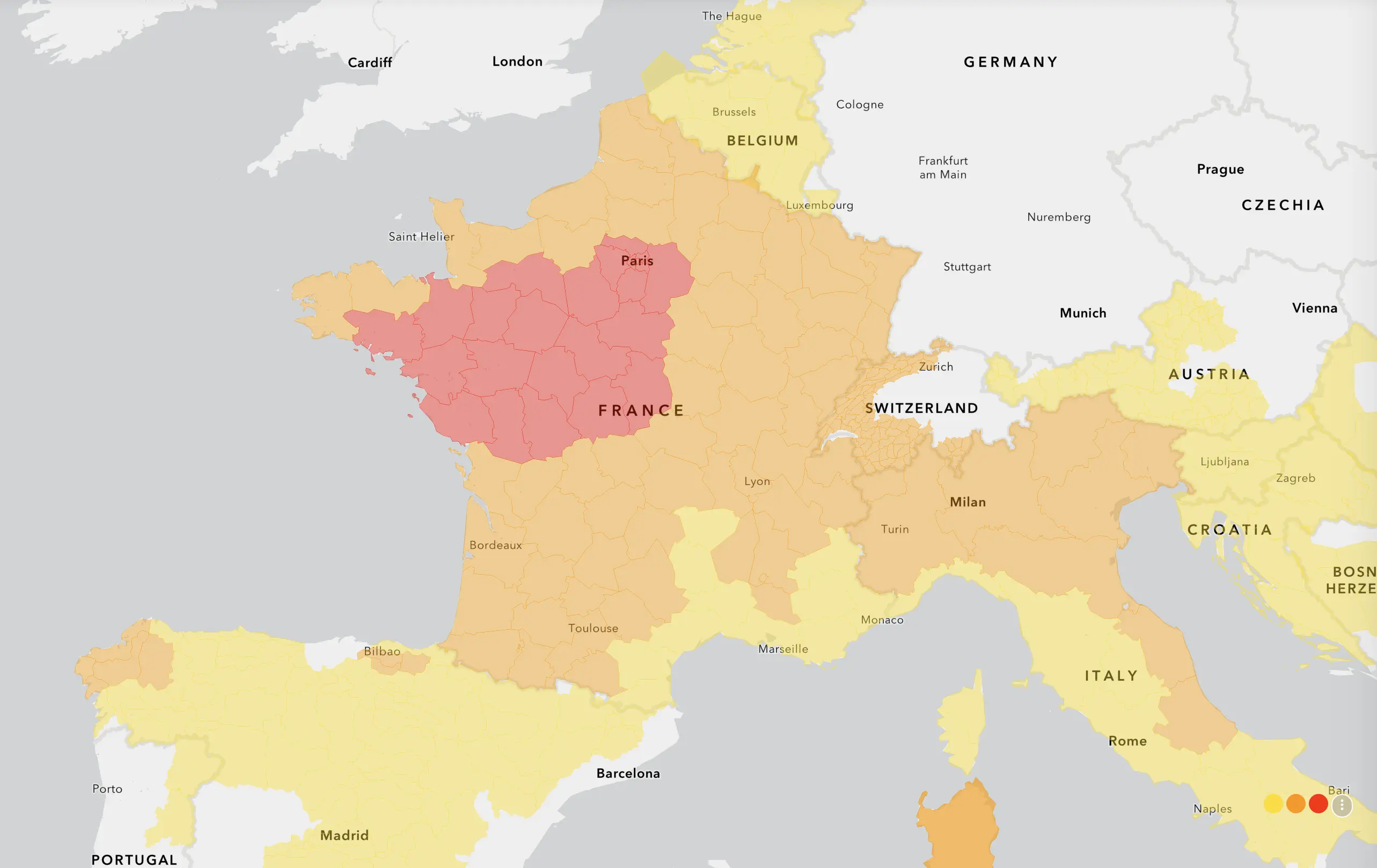
According to Meteoalarm.org, several European countries remain under critical weather alerts for heat, storms, or flooding:
Red alerts: Italy, Spain, Greece, southern France – extreme heat and fire danger
Orange alerts: Croatia, Slovenia, North Macedonia – risk of heavy thunderstorms and flash flooding
Yellow alerts: Poland, Czech Republic, Germany, Austria – severe thunderstorms, hail, strong winds
Green zones: Ireland, Denmark, Sweden – relatively calm, with occasional light rain
🌍 Country-by-Country Outlook for July 14–20
Spain (Madrid) Scorching and dry. Daily highs up to +43–44°C, especially in central and southern regions. No rain expected. Wildfires continue across Andalusia and Castilla-La Mancha. Farmers report up to 70% crop loss in tomatoes and peaches.
Italy (Rome) Temperatures ranging from +38 to +40°C, no significant rainfall. Wildfire risk remains extremely high across Sardinia, Sicily, and southern mainland. Night temperatures stay above +27°C, offering no relief.
Greece (Athens) Another brutal week ahead. +39–41°C, dry, smoky air due to forest fires on Evia and Rhodes. Local hospitals report dozens of daily heatstroke cases, including among children.
France (Paris & Provence) Northern France sees some relief (+27–30°C) with occasional showers expected on July 17–18. However, the south remains dangerously hot, especially near Marseille and Nice, with highs up to +37°C.
Germany (Berlin) Relatively cooler temperatures around +22–24°C in the north, but thunderstorms are expected midweek, especially in eastern regions. Southern Germany remains warmer (+27°C) with risk of localized flooding.
Poland (Warsaw) A cooldown after the previous week’s highs. Daytime temperatures around +24–26°C, but thunderstorms expected on July 16–17, with possible flash floods near rivers such as the Vistula and Bug.
Czech Republic & Slovakia (Prague, Bratislava) Warm and unstable. Temperatures between +25–28°C, with storm systems bringing short but intense downpours and hail starting midweek.
Hungary (Budapest) Still hot and dry, with highs of +32–35°C. Minimal rain expected. Low humidity combined with heat makes conditions exhausting for elderly and vulnerable populations.
Romania & Moldova (Bucharest, Chisinau) Temperatures will hover around +33–35°C all week. Some showers possible toward July 19–20, but overall conditions remain dry and oppressive.
🌊 Wildfires, Drought, and Power Failures
The southern half of the continent is turning to ash. According to RSOE-EDIS, 47 active wildfires were reported last week alone. Rivers like the Po in Italy and the Loire in France are drying up, revealing cracked earth and dead fish. In Portugal, rolling blackouts have affected over 200,000 homes in a single day due to surging demand for air conditioning.
Cities like Lisbon, Rome, and Madrid are now described as “urban heat islands,” where temperatures remain dangerously high even at night. The lack of nighttime cooling increases the risk of heat-related illnesses, especially among seniors and children.
🚨 A Climate Crisis, Not Just a Hot Summer
Scientists are clear: this is not a fluke. According to climate models, Europe’s average temperature has risen by 1.5°C in the last 30 years. Extreme heat events are now three times more likely than they were just a decade ago. Unless greenhouse gas emissions are drastically reduced, these “killer summers” will become the new normal.
🌦️ When Will It End?
There’s cautious optimism among forecasters. Starting July 18, weak Atlantic air may begin pushing the anticyclone eastward. This could bring cooler temperatures (down to +28–32°C) in some central European regions and isolated rain showers in the north.
But don’t expect a miracle. The overall heat pattern will persist into late July, especially in southern Europe, where +40°C days will continue. The best-case scenario is a slight drop in temperatures and some rain—just enough to ease pressure on infrastructure and public health systems.
💡 Final Advice from The Weather Forecaster Team
If you’re in Europe this week: stay hydrated, avoid being outdoors during peak heat hours (12–17:00), and keep an eye on official heat and wildfire alerts. Vulnerable individuals—especially the elderly—should be closely monitored.
The Founder and Chief Meteorologist at Pogodnik.com. With over 15 years of operational experience in synoptic analysis and climate forecasting, he specializes in storm tracking, magnetic storms, and atmospheric dynamics. A recognized expert in Ukraine’s meteorological sector, he maintains strategic collaborations with global agencies, including NOAA and ECMWF, to ensure high-precision data integration. His analytical reviews and scientific contributions are regularly featured in leading media outlets dedicated to weather science and environmental trends.