Weather Turned Nightmare: How Blistering Heat and Winds Fueled Israel’s Most Destructive Wildfire in Modern History

Israel has been grappling with one of the most destructive wildfire events in its modern history. What began as a relatively small forest fire quickly spiraled into a massive blaze, consuming over 6,000 acres of land in just a matter of hours. Blistering heat, dry air, and strong winds created the perfect, terrifying conditions for an inferno that tore through the forests of the Judean Hills near Jerusalem, leaving behind a trail of devastation, fear, and a landscape scarred beyond immediate recognition.
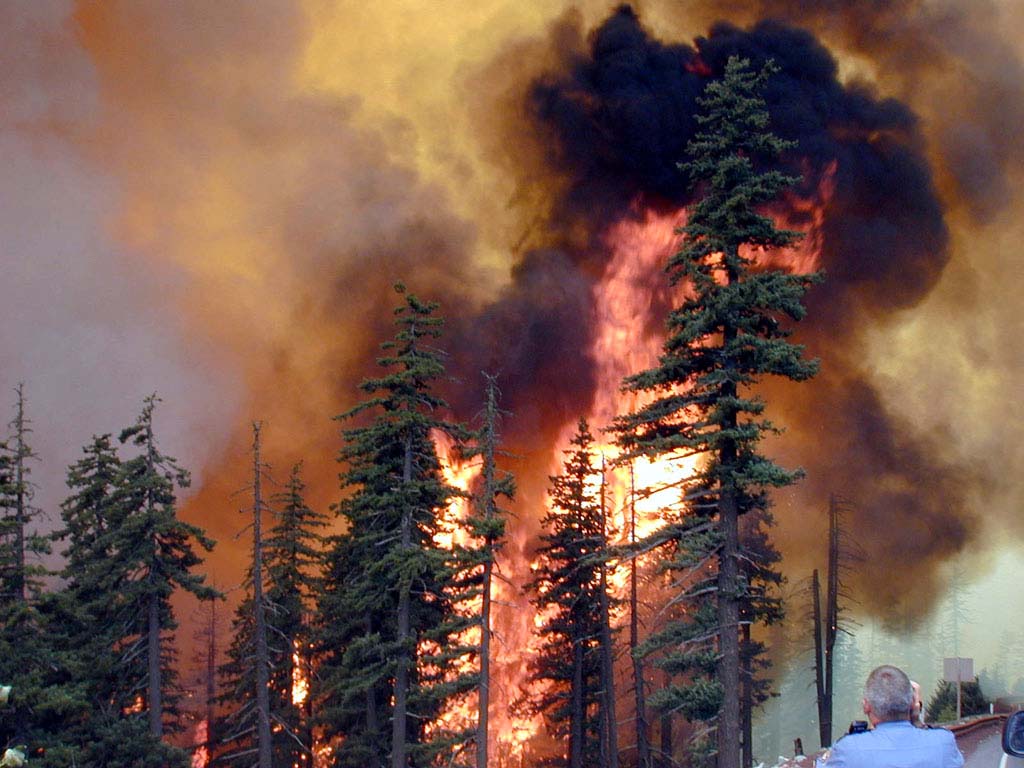
The sheer scale and speed of this environmental catastrophe have shocked the nation. Entire hillsides were swallowed by flames, a horrifying spectacle against the backdrop of a sky turned ominous grey. Thick smoke blanketed roads and towns, reducing visibility to near zero in many areas and casting a suffocating haze over the region, even reaching the skyline around Jerusalem. The once green and vibrant Judean Hills, a beloved area for recreation and a vital natural habitat, were transformed into a charred, smoldering expanse.
This event underscores the dramatic and destructive power of weather when combined with the right environmental conditions. The blistering heatwave that preceded and accompanied the fires had dried out vegetation to a tinder-like state, creating ample fuel. Coupled with persistently dry air and powerful, erratic winds, the stage was set for a conflagration that would prove incredibly challenging to control.
The initial conditions and start of the wildfire
The first ominous signs of the unfolding disaster appeared near the Echoll forest, not far from Mezallet Zion. Initially reported as a contained fire, the situation rapidly deteriorated. High winds, acting like a bellows, pushed the flames with incredible force and speed. This wasn’t a slow creep; it was an explosive expansion. As winds shifted, new fire fronts emerged simultaneously in multiple directions, making containment efforts exponentially more difficult for the first responders arriving on the scene.
It became clear almost immediately that this was not a typical wildfire – the speed and intensity indicated a critical combination of adverse weather and dry terrain. The extreme heat not only dehydrated the plant life but also added to the danger and exhaustion faced by those battling the blaze on the ground.
As the fire raged, it reached the outskirts of several communities, including Nev Shalom, Taho, Mavo Horin, and Mishar Aalon. The threat to human life and property became immediate and severe. Recognizing the imminent danger, authorities acted swiftly to initiate large-scale evacuations. The directive was clear and urgent: over 10,000 residents from at least 10 towns and villages in the affected areas were ordered to leave their homes. This was a massive undertaking, requiring coordinated efforts across multiple emergency services and governmental agencies.
Police officers went door-to-door, often knocking forcefully and urging families to leave their homes immediately, emphasizing the speed with which the fire was advancing. There was little time for hesitation or gathering belongings; safety was the paramount concern. Buses and ambulances were rapidly deployed to transport those without personal vehicles, ensuring that the elderly, disabled, and other vulnerable residents could be safely moved away from the path of the fire.
The scenes were often chaotic but underscored the urgency of the situation, with residents grabbing essential items and heading to designated safe zones, many watching from a distance as smoke billowed higher and higher from their neighborhoods.
Among the most dangerous and disruptive consequences of the fires was the impact on transportation and critical infrastructure. Highway 1, the main artery connecting Jerusalem to Tel Aviv, a vital route for commerce and travel across the country, was temporarily shut down in both directions.
This closure was unavoidable due to the extreme conditions. The heavy smoke reduced visibility to almost nothing, creating perilous driving conditions. In some areas, the fire approached dangerously close to the roadway itself, with flames licking at the edges of the asphalt.
The situation on Highway 1 and surrounding roads quickly became a stark illustration of the fire’s power and the ensuing panic. Drivers were seen abandoning their vehicles in the middle of the road and running to safety as flames crept over the hillsides towards them. This desperate measure highlighted the immediate threat faced by those caught near the fire’s path. Traffic congestion, a predictable consequence of mass evacuations and major road closures, compounded the emergency efforts.
Evacuation routes became choked with vehicles, turning what should have been orderly movements into chaotic escape routes. Emergency services, already stretched thin battling the inferno, had to contend with navigating gridlocked roads to reach affected areas and transport evacuees. The disruption to infrastructure extended beyond roads, with potential damage to power lines, communication networks, and other vital services in the fire zone.
The emergency response to this unprecedented event was massive and sustained, pushing resources and personnel to their absolute limits. Over 160 firefighting teams were deployed to battle the relentless flames on the ground. These brave men and women worked in grueling shifts, often without pause, facing not just the intense heat of the fire itself but also the extreme ambient temperatures and overwhelming exhaustion.
They battled thick smoke, unpredictable wind shifts, and the constant threat of being overrun by the fast-moving blaze. Their courage and determination were crucial in trying to contain the spread.
Backing the ground crews was a vital fleet of 12 aircraft and helicopters. These aerial assets played a critical role, dropping water and fire retardants on hotspots and areas inaccessible to ground teams. They provided crucial support in trying to create firebreaks and protect communities.
Firefighters on the ground and in the air worked in constant coordination, a complex logistical operation under immense pressure. Despite their heroic efforts, the scale and intensity of the fire, fueled by the adverse weather conditions, made it a formidable adversary.
The human cost of the wildfire was significant, extending beyond the immediate threat to homes. Several emergency responders suffered from smoke inhalation and heat-related injuries, a testament to the dangerous conditions they faced. In total, more than 45 civilians were treated for various injuries, mostly due to smoke exposure. Among those requiring urgent medical care were vulnerable individuals, including infants and pregnant women, who were rushed to hospitals for treatment.
The health impacts of inhaling thick smoke can be severe, affecting respiratory systems and requiring immediate attention. The images of vulnerable populations being evacuated and receiving medical care served as a poignant reminder of the fire’s indiscriminate reach.
Beyond the immediate human impact, the fires also took a devastating toll on agriculture and natural habitats in the Judean Hills region. This area is known for its agricultural produce, including vineyards and olive groves, which are central to the livelihoods of many local farmers. Entire vineyards were reduced to ash, the vines charred and destroyed. Olive groves, some ancient and irreplaceable, were burned beyond recovery.
The environmental damage is immense, impacting biodiversity and the delicate ecosystem of the hills. Wildlife, caught in the path of the inferno, was driven from their natural homes. Birds fled the smoke-filled skies, their usual calls replaced by the roar of the fire. Deer and smaller animals were seen running in panic, desperate to escape the flames and smoke. The long-term impact on these natural habitats and wildlife populations remains to be fully assessed but is expected to be substantial.
The economic impact on farmers and rural communities in the affected areas is expected to be substantial.
Many have lost their crops, trees, and potentially their entire farming infrastructure. Fields, storage facilities, irrigation systems – all were vulnerable to the fire’s destructive path. Rebuilding and recovering from such losses will be a lengthy and costly process, leaving many livelihoods in jeopardy and requiring significant support from the government and aid organizations. The economic scars of this fire will likely be felt for years to come.
As the flames continued to spread and the scale of the disaster became fully apparent, international support began to arrive. Several countries dispatched aircraft and equipment to assist in the firefighting effort, demonstrating global solidarity in the face of a major environmental crisis. These international crews worked in close coordination with Israeli forces, pooling resources and expertise to combat the blaze.
Their focus was critical: preventing the fire from reaching more densely populated areas, where the risk to human life and property would be even higher. The sight of multiple nations contributing to the firefighting efforts underscored the severity of the situation and the shared challenge of combating such large-scale natural disasters, exacerbated by extreme weather.
As operations continued to bring the fire under control and the immediate crisis began to subside, questions emerged regarding the exact cause of the fires. While some officials pointed to natural causes – primarily the combination of the aforementioned high temperatures, dry air, and strong winds creating a highly combustible environment – others did not immediately rule out the possibility of arson. The rapid spread and multiple ignition points in some areas fueled suspicions that the fires may not have been solely a natural phenomenon.
Investigations were launched to determine the precise origin and cause of the blaze. As part of this ongoing inquiry, several individuals were reportedly taken into custody for questioning. Authorities are examining all possibilities, including accidental ignition and deliberate acts. Determining the cause is crucial not only for potential legal action but also for implementing preventative measures to reduce the risk of similar disasters in the future.
Adding a layer of profound difficulty and sorrow to the situation, the timing of the disaster only added to the national sense of grief and disruption. The wildfire coincided with Israel’s Remembrance Day, a solemn occasion to honor fallen soldiers and victims of terror. The lead-up to Independence Day celebrations, a time of national pride and festivity, was also overshadowed by the crisis.
As a result, many public events planned for these significant national days were cancelled or scaled back, including the traditional torch-lighting ceremony on Mount Herzl, a central event of the Independence Day celebrations. The somber reality of the fires contrasted sharply with the planned celebrations, forcing a national moment of reflection and a focus on resilience in the face of adversity.
In conclusion, the wildfire in the Judean Hills stands as a stark reminder of nature’s power, amplified by extreme weather conditions. The combination of blistering heat, dry air, and strong winds created a perfect storm that led to widespread devastation, impacting lives, livelihoods, and the environment. While the immediate threat has receded thanks to the tireless efforts of firefighters and international aid, the long-term recovery will be a significant challenge.
Investigations into the cause continue, as the nation reflects on the events that coincided with a period of national remembrance and celebration, highlighting the vulnerability of communities to climate-related extremes. This event serves as a critical case study in the increasing risks posed by changing weather patterns and the vital need for preparedness and international cooperation in facing them.
China’s Unprecedented Storm Leaves Trail of Devastation