Europe Heatwave 2026: The Fourth Wave, Ongoing Wildfires, and Long-Term Forecasts
Welcome back, weather enthusiasts and concerned readers. Today is July 25, 2026, and looking at the latest atmospheric data, it’s clear that this summer is relentless. Just when we thought the continent might get a breather, a fourth major heatwave is locked and loaded for Western Europe, targeting Spain, France, and parts of Western Germany by the end of July and early August.
In today’s long-read meteorological breakdown, we will analyze the extreme ECMWF percentile anomalies, review the devastating wildfire situation as of today, and dive deep into the long-term seasonal models for August 2026.
⚠️ Current Wildfire Update (July 25, 2026): As of this afternoon, the situation across the Mediterranean remains critical. Severe wildfires are currently ravaging parched forests in Spain’s Andalusia and Catalonia regions. In Southern France, particularly around the Var and Gironde departments, firefighters are struggling to contain blazes fueled by tinder-dry vegetation and erratic winds. Smoke plumes are visible on satellite imagery stretching over the Mediterranean Sea. The incoming fourth wave of extreme heat threatens to act as an accelerant, making containment incredibly difficult over the next week.
Decoding the 850 hPa Maps: Why This Heat is Unprecedented
Let’s look closely at the ECMWF forecast maps running from late July into the first few days of August. We are analyzing the 850 hPa temperature level (roughly 1.5 km or 5,000 feet above sea level). This altitude is crucial because it represents the raw air mass temperature, free from surface-level microclimates.
Notice that the maps provided do not show absolute temperatures or standard Celsius anomalies. Instead, they display the Percentile Rank relative to the ERA5 climate baseline (1979–2021).
What does a high percentile mean? It indicates how unusually hot the forecasted temperature is for this exact time of year.
The Danger Zone: Starting around July 29 and peaking through August 2-3, we see massive patches of dark red, burgundy, and purple over Spain and France. These colors correspond to the 99th percentile and even “Record Max” levels.
In layman’s terms: The atmosphere at 1.5 km is predicted to be hotter than almost anything recorded in the last 40+ years for these dates. This massive “heat dome” will inevitably compress and sink to the surface, bringing stifling, record-breaking ground temperatures to Madrid, Paris, and eventually Frankfurt.
The Long-Term Outlook: What Do the Extended Models Say?
A frequent question I get is: “When will this end? What does August hold?” To answer this, we need to look beyond the immediate 10-day forecast and consult the long-range ensembles (ECMWF Extended and NOAA‘s CFSv2).
August 2026 Long-Range Model Consensus:
Unfortunately, the long-term data offers little comfort. The models indicate a persistent Omega Block pattern taking root over Europe.
Atmospheric Blocking: A stubbornly strong Azores High is extending its ridge deep into the European continent. This high-pressure system acts like a wall, deflecting cooler, rain-bearing Atlantic low-pressure systems far to the north (towards Scandinavia).
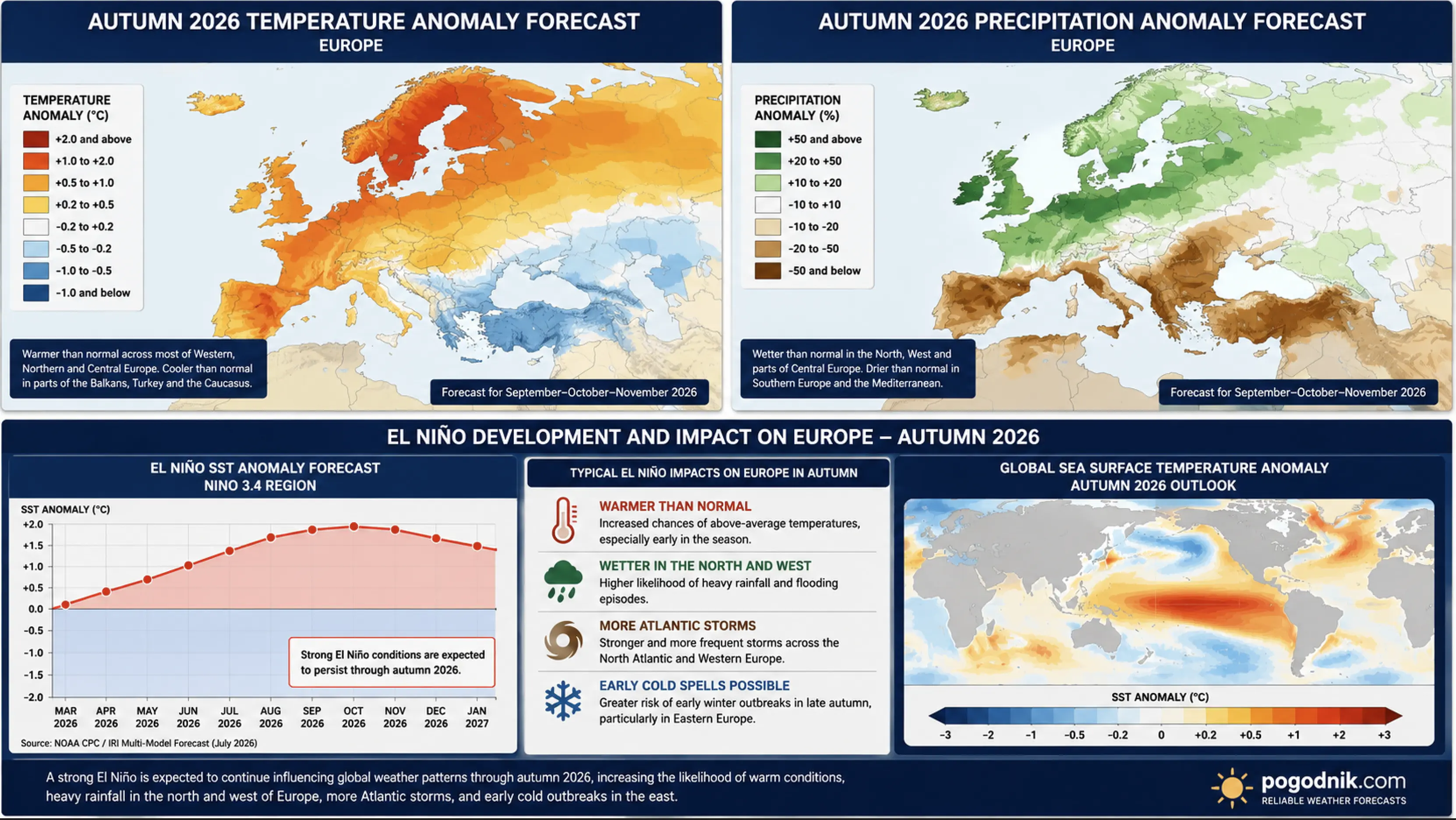
Sustained Anomalies: The multi-week outlook for August 2026 suggests that temperatures across Southern and Central Europe will remain 1.5°C to 2.5°C above the historical average.
Precipitation Deficit: Alongside the heat, long-term models signal highly below-average rainfall for the Iberian Peninsula, France, and Italy. The drought conditions, which are already fueling the July 25 wildfires, are expected to worsen.
Impacts and Preparation
The convergence of the upcoming fourth heatwave and the ongoing drought creates a severe risk matrix for Western Europe:
Wildfire Escalation: The “fire weather index” (FWI) is predicted to reach extreme levels across France and Spain by July 31.
Infrastructure Strain: Power grids will face intense pressure from continuous air conditioning use, compounded by reduced output from nuclear plants in France (due to warming river waters used for cooling).
Public Health: The lack of nighttime cooling—often referred to as “tropical nights” where temperatures do not drop below 20-25°C—prevents the human body from recovering from daytime heat stress.
Final Thoughts
The Europe heatwave 2026 is proving to be a defining meteorological event. The combination of record-breaking upper-air temperatures, aggressive wildfires, and long-term blocking patterns underscores the accelerating reality of our shifting climate. Stay hydrated, follow local emergency alerts, and stay tuned to our blog for daily updates as this fourth wave develops.
The Founder and Chief Meteorologist at Pogodnik.com. With over 15 years of operational experience in synoptic analysis and climate forecasting, he specializes in storm tracking, magnetic storms, and atmospheric dynamics. A recognized expert in Ukraine’s meteorological sector, he maintains strategic collaborations with global agencies, including NOAA and ECMWF, to ensure high-precision data integration. His analytical reviews and scientific contributions are regularly featured in leading media outlets dedicated to weather science and environmental trends.