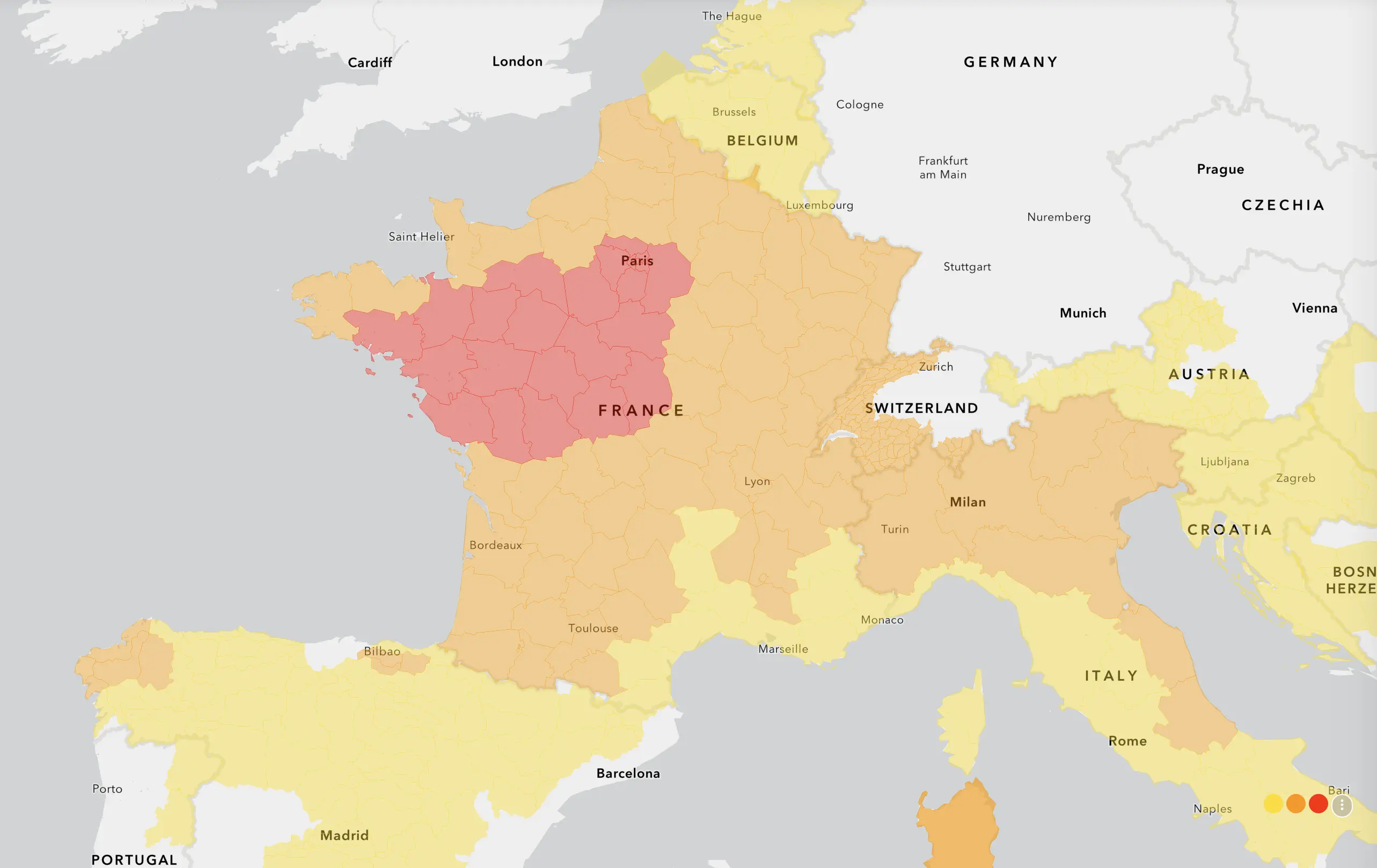
Allergy Forecast for May 2025 in Europe: Country-by-Country Overview
May marks the peak of the pollen season across Europe, presenting significant challenges for allergy sufferers. This forecast provides an in-depth look at expected pollen levels, predominant allergens, and regional variations to help individuals manage their symptoms effectively. European Aeroallergen Network (EAN).
Allergy United Kingdom
Tree Pollen (Late March – Mid-May): Birch, ash, and oak trees are the primary culprits during this period. The Met Office reports that birch pollen levels have been notably high, particularly in southern and eastern regions.
Grass Pollen (Mid-May – July): Grass pollen season commences in mid-May, with peaks typically occurring in June. Given the warm spring conditions, an early onset is anticipated.
Weed Pollen (Late June – September): Weed pollen, including nettle and mugwort, becomes more prevalent later in the season.
Allergy Regional Variations:
England & Wales: Higher pollen counts due to warmer temperatures.
Scotland & Northern Ireland: Later onset and generally lower pollen levels.
France
Tree Pollen: Birch and oak trees dominate the early May pollen landscape, especially in northern regions.
Grass Pollen: Grass pollen levels rise in mid-May, with central and southern areas experiencing higher concentrations.
Weed Pollen: Mugwort and plantain pollen become significant in late May, particularly in rural areas.
Regional Variations:
Northern France: Higher tree pollen levels.
Southern France: Earlier grass pollen season due to warmer climate.
Germany
Tree Pollen: Birch and alder trees contribute to high pollen levels in early May. The SILAM model indicates concentrations exceeding 500 particles/m³ in central regions.
Grass Pollen: Expected to increase in mid-May, with peaks in June.
Weed Pollen: Mugwort and ragweed pollen become more prevalent in late May.
Regional Variations:
Central Germany: Highest tree pollen concentrations.
Southern Germany: Earlier grass pollen season onset.
Spain
Tree Pollen: Olive and cypress trees are significant allergens, especially in southern regions.
Grass Pollen: Grass pollen levels rise in mid-May, with central areas experiencing higher concentrations.
Weed Pollen: Chenopodium and salsola pollen become significant in late May.
Regional Variations:
Southern Spain: Higher tree pollen levels due to olive cultivation.
Central Spain: Elevated grass pollen concentrations.
Italy
Tree Pollen: Birch and plane trees contribute to pollen levels in early May, particularly in northern regions.
Grass Pollen: Grass pollen season begins in mid-May, with peaks in June.
Weed Pollen: Mugwort and ragweed pollen become more prevalent in late May.
Regional Variations:
Northern Italy: Higher tree pollen concentrations.
Southern Italy: Earlier onset of grass pollen season.
Poland
Tree Pollen: Birch and alder trees dominate the pollen landscape in early May, with concentrations reaching up to 1,000 particles/m³ in some areas.
Grass Pollen: Grass pollen levels rise in mid-May, with peaks in June.
Weed Pollen: Mugwort and ragweed pollen become significant in late May.
Regional Variations:
Western Poland: Higher tree pollen concentrations.
Eastern Poland: Elevated grass pollen levels.
Ukraine
Tree Pollen: Birch, alder, and oak trees contribute to high pollen levels in early May, particularly in western regions.
Grass Pollen: Grass pollen season begins in mid-May, with peaks in late May.
Weed Pollen: Mugwort and ragweed pollen become more prevalent in late May.
Regional Variations:
Western Ukraine: Higher tree pollen concentrations.
Central and Eastern Ukraine: Elevated grass pollen levels.
Recommendations for Allergy Sufferers:
Monitor Pollen Forecasts: Regularly check local pollen forecasts to stay informed about current levels.
Limit Outdoor Activities: Reduce time spent outdoors during peak pollen times, typically early morning and late afternoon.
Keep Windows Closed: Maintain indoor air quality by keeping windows closed, especially during high pollen days.
Use Air Purifiers: Consider using HEPA filters to reduce indoor pollen concentrations.
Shower After Outdoor Exposure: Showering and changing clothes after being outside can help remove pollen from your body.
Consult Healthcare Providers: Seek medical advice for appropriate medications, such as antihistamines or nasal corticosteroids.
The Founder and Chief Meteorologist at Pogodnik.com. With over 15 years of operational experience in synoptic analysis and climate forecasting, he specializes in storm tracking, magnetic storms, and atmospheric dynamics. A recognized expert in Ukraine’s meteorological sector, he maintains strategic collaborations with global agencies, including NOAA and ECMWF, to ensure high-precision data integration. His analytical reviews and scientific contributions are regularly featured in leading media outlets dedicated to weather science and environmental trends.