Heavy snowfall disrupts travel across Poland as winter tightens grip on Central Europe
Poland, December 31, 2025 – January 1, 2026 — A significant winter snowfall swept across large parts of Poland at the turn of the year, causing major disruption to road, rail and air travel and highlighting the growing impact of persistent winter weather across Central Europe.
The snowstorm, accompanied by freezing temperatures and gusty winds, led to widespread traffic congestion, stranded motorists and delays for thousands of travellers during one of the busiest holiday periods of the year.
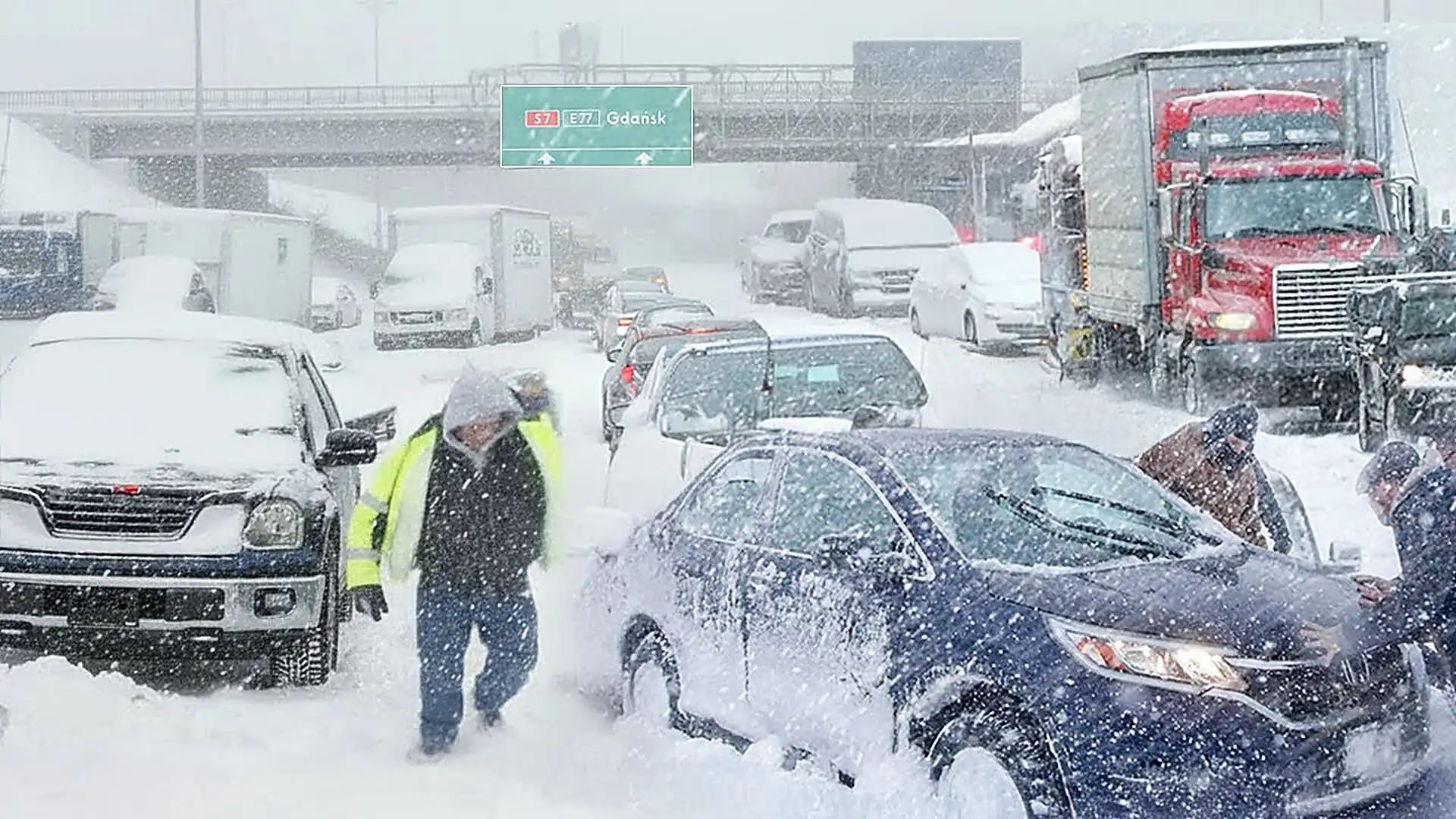
Major road disruptions reported nationwide
The most severe disruption was recorded on the S7 expressway linking Warsaw with Gdańsk, where traffic queues stretched up to 20 kilometres after heavy snow accumulated faster than road crews could clear it. Vehicles were forced to move at very low speeds or stop entirely for several hours as visibility dropped and road surfaces became icy.
Police confirmed numerous road incidents across northern and central Poland, most caused by loss of traction on snow-covered and untreated roads. Emergency services were deployed extensively to manage accidents and assist drivers stuck in severe winter conditions.
Air and rail transport affected
Air travel was also impacted as winter conditions reduced visibility and complicated runway operations. Flights at Warsaw Modlin Airport were temporarily suspended overnight, while delays were reported at other regional airports.
Rail services experienced interruptions as freezing temperatures and snow accumulation slowed train movements, particularly on regional and intercity routes. Public transport in urban areas was also affected, with buses and trams operating under difficult conditions.
Meteorological background
According to meteorologists, the snowfall was triggered by a surge of cold Arctic air advancing southward into Central Europe. As the cold air mass interacted with moisture-rich systems over the region, prolonged snowfall developed rather than short-lived snow showers.
Poland’s national weather service issued multiple warnings for heavy snow, strong winds and locally freezing rain. In exposed areas, blowing snow significantly reduced visibility and led to drifting, especially on open roads and elevated sections of motorways.

Authorities urge caution
Polish authorities held emergency coordination meetings as conditions deteriorated, urging drivers to avoid non-essential travel and to prepare for rapidly changing weather. Road maintenance services operated continuously through the night, deploying snowploughs and de-icing equipment across major routes.
Officials warned that even where snowfall intensity decreased, freezing temperatures would allow compacted snow and meltwater to refreeze, maintaining dangerous driving conditions.

Forecast: winter conditions persist across the region
Forecasters say winter weather is expected to continue into the first days of January, not only in Poland but across parts of Central and Eastern Europe.
On January 1, further snowfall is likely across northern and central Poland, with temperatures remaining below freezing throughout the day. This will allow existing snow cover to persist and increase the risk of black ice, particularly overnight.
During the following 48 to 72 hours, cold air is forecast to dominate much of the region. Night-time temperatures may fall to around –4°C or lower inland, with occasional snow showers and icy conditions continuing across Poland, Germany’s eastern regions, the Czech Republic and parts of the Baltic states.
A challenging start to 2026
The New Year snowfall in Poland serves as an early indicator of an active winter pattern developing across Central Europe. Meteorologists note that the broader circulation remains favourable for further cold intrusions, meaning additional winter weather episodes remain possible in the coming weeks.
Travellers and commuters across the region are advised to monitor official forecasts closely, allow extra time for journeys and remain cautious as Europe enters 2026 under firmly wintry conditions.