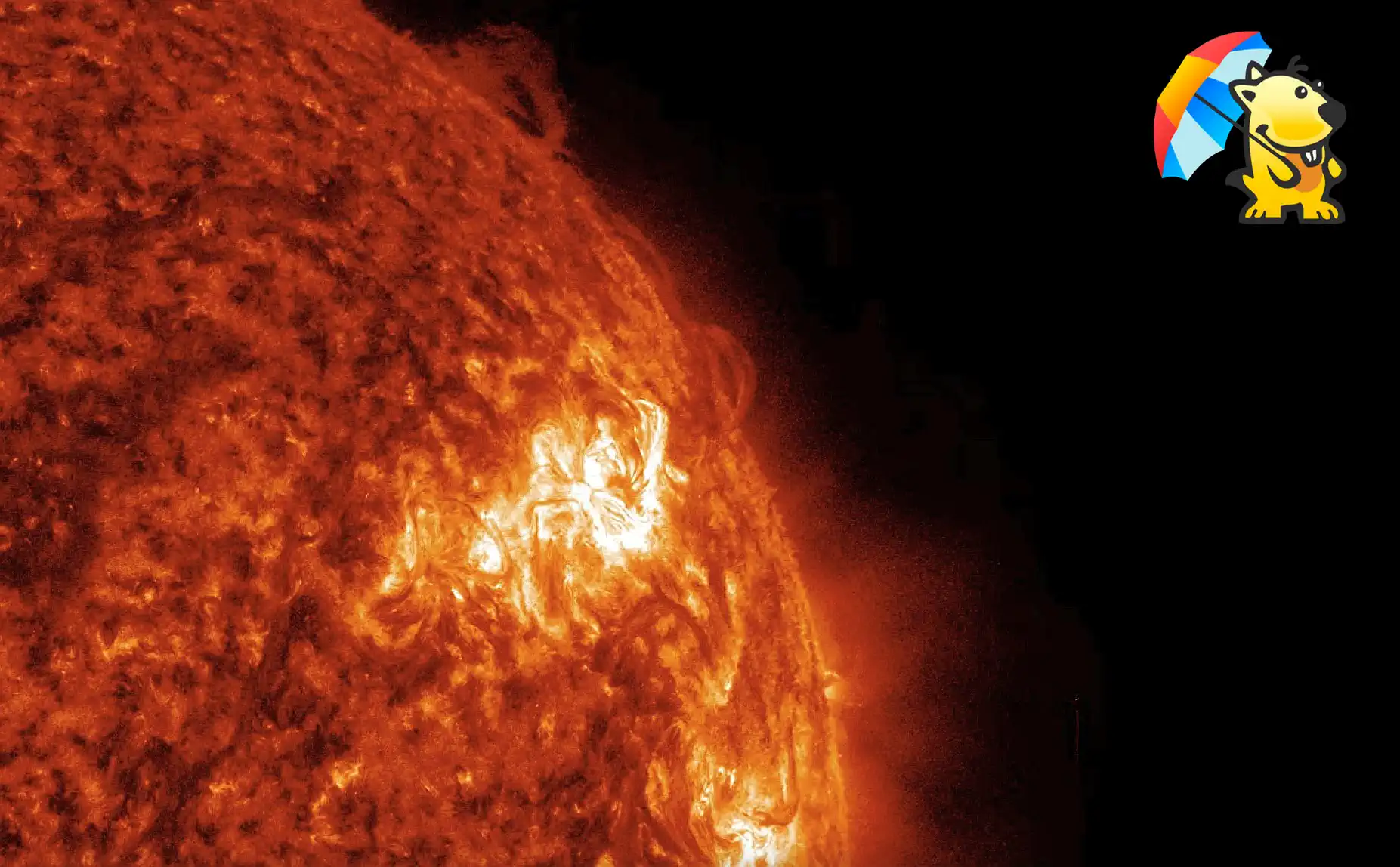
G2 level magnetic storm recorded on Earth

G2 Magnetic storm – June 13, 2025
According to space meteorology, on June 13, 2025, increased geomagnetic activity of G2 was observed on Earth, caused by the fading effect of a high-speed flow from a coronal hole of negative polarity (CH HSS) and possible transient effects.

Image: NASA SDO/AIA
A G1 (weak) geomagnetic storm was recorded at 20:34 UTC on June 12, and at 00:29 UTC on June 13, the level increased to G2 (moderate).
The main impact of G2 storms affects regions north of 55 degrees geomagnetic latitude. Fluctuations in power grids are possible, and voltage alarms may occur at high latitudes. Satellite operators may experience attitude disturbances or increased drag in low orbits.
High-frequency (HF) radio communications at high latitudes may be attenuated, and auroras may be visible as far south as New York, Wisconsin, and Washington.
Geomagnetic activity is expected to return to normal levels by the end of June 13. However, the influence of the high-speed outflow from the positive-polarity coronal hole may increase activity again on June 14, with the possibility of a weak grazing impact from the June 8 coronal mass ejection (CME). Elevated conditions may persist through June 15, according to the Space Weather Prediction Center (SWPC).
A repeat of the G2 (strong) geomagnetic storm is likely on June 14, with a small chance of reaching G3 (strong) due to a combination of the CH HSS and possible effects of the June 8 CME. Activity is expected to taper off by June 15 as these factors subside.
Solar activity has remained low over the past 24 hours, with no C-class flares registered and no Earth-directed CMEs. Isolated M-class flares are likely through June 15, mostly due to activity in regions 4105, 4107, and 4115.
For up-to-date data, check the SWPC website.