Magnetic Storm May 15–17, 2026: Giant Coronal Hole Strikes Earth — Aurora Viewing Guide and Tips for the Weather-Sensitive
Starting Friday, May 15, Earth enters a powerful, high-speed solar wind stream originating from a giant coronal hole in the center of the solar disk. According to NOAA and the UK Met Office, geomagnetic activity will escalate to G2 (Moderate), with potential spikes reaching G3 (Strong). The aurora borealis is expected to be visible far beyond the Arctic Circle.
NOAA SWPC Warning: G1–G2 geomagnetic activity is expected on May 15–17, 2026. Brief G3 intervals cannot be ruled out. Source: a recurrent coronal hole with negative polarity.
What Happened on the Sun: Two Sources of the Strike
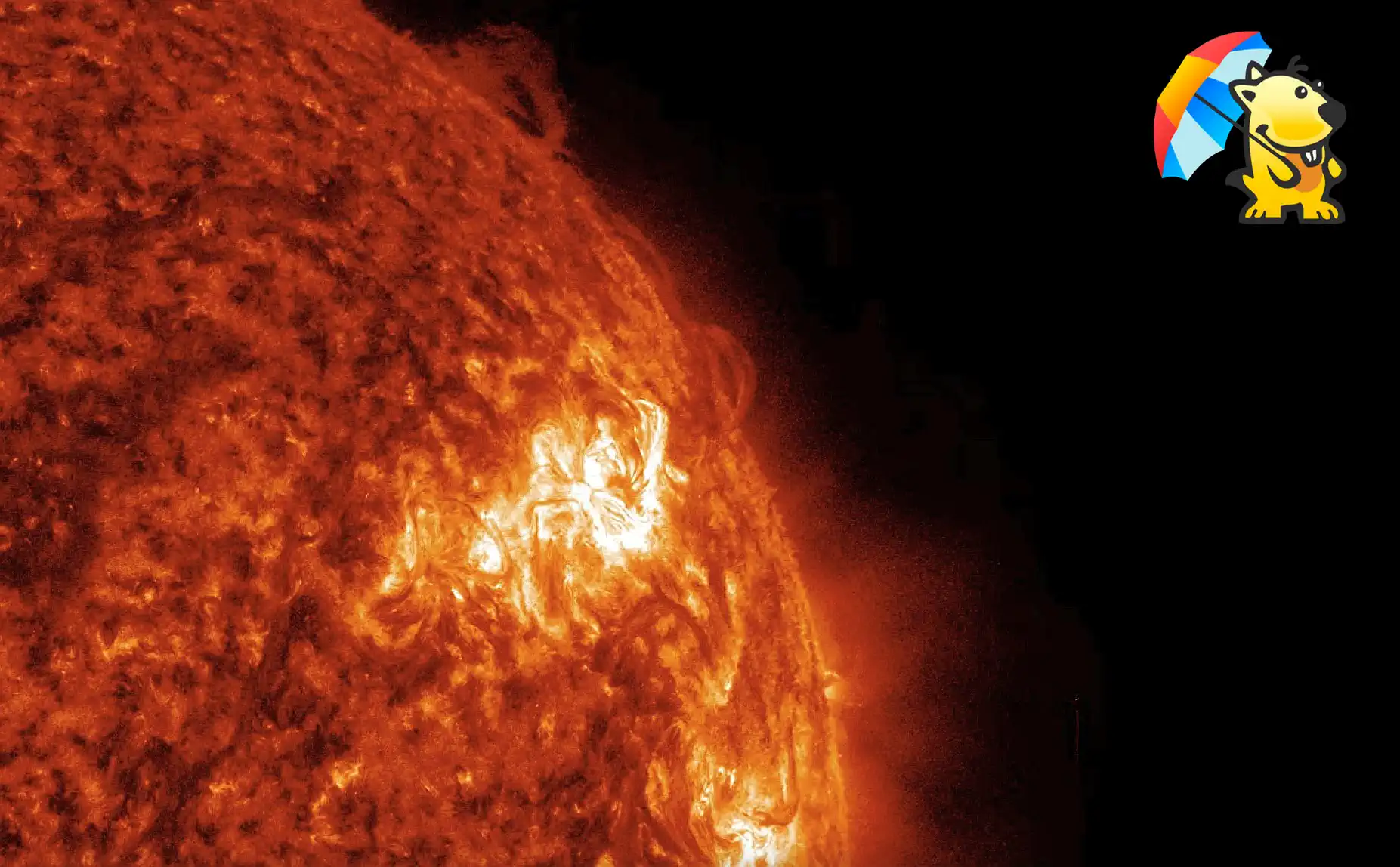
This storm is the result of two overlapping events. First, a large recurrent coronal hole with negative polarity has moved into a central, geoeffective position on the Sun’s disk. Coronal holes—regions of the corona with open magnetic field lines—accelerate solar wind to speeds of 650–800 km/s, twice the normal rate. Second, active region AR4436 produced an M5.8 flare on May 10; the resulting CME delivered a “glancing blow” on May 13–14, pre-disturbing the magnetosphere.
This is a recurrent coronal hole—it triggered storms during the Sun’s previous rotation. According to NOAA’s 27-day outlook: “Geomagnetic activity will reach G1 on May 15–17 due to the influence of a negative polarity recurrent coronal hole; high fluxes of >2 MeV electrons are also expected on May 15–20.”
Hourly K-Index Forecast (UTC)
*Times are shown in UTC. For US Eastern Daylight Time (EDT), subtract 4 hours. For Central European Summer Time (CEST), add 2 hours.
Time (UTC)
May 15 — Friday
May 16 — Saturday
May 17 — Sunday
00:00
K=3–4
K=6 — G2
K=5 — G1
03:00
K=3–4
K=6–7 — G2/G3
K=5 — G1
06:00
K=4–5
K=7 — G3 ⚡
K=4–5
09:00
K=5 — G1
K=6 — G2
K=4
12:00
K=5 — G1
K=5–6 — G1/G2
K=3–4
18:00
K=6 — G2
K=5 — G1
K=3
21:00
K=6 — G2
K=5 — G1
K=2
Aurora Borealis May 15–16: Where to Look
During a G2 storm, the auroral oval drops to 55–58° geomagnetic latitude. With G3 spikes, it can drop to 50° and lower. Space.com confirms: visibility is expected across the northern US states, Canada, and Northern Europe. The UK Met Office has also issued a dedicated geomagnetic forecast.
Best viewing time: 11:00 PM – 4:00 AM local time, the night of May 15–16. Find dark skies (12–20 miles / 20–30 km outside the city) and look North. Use your smartphone’s night mode with a 10–15 second exposure. Enable notifications in the Pogodnik app — a push alert will arrive when K≥5.
Tips for Weather-Sensitive Individuals for May 15–17
Peak impact on the body: 03:00–09:00 UTC on Saturday, May 16 (Late Friday night for the US, Saturday morning for Europe). This is when the G3 maximum is anticipated. Plan a calm day without intense physical or emotional stress.
For hypertensive and heart patients: Monitor your blood pressure every 2–3 hours throughout all three days, avoid exertion during peak hours, and keep “on-demand” medications nearby.
For migraines: Take preventive measures the evening of May 14, eliminate triggers, and take prescribed medication at the first sign of an aura.
For anxiety and insomnia: Cut off caffeine by 2:00 PM, minimize screen time before bed, practice 4-7-8 breathing, and take magnesium (if advised by your doctor).
For everyone: Get 8+ hours of sleep, drink 2 liters of water daily, limit alcohol, and take a light walk the evening of May 14.
The May 15–17 event is a sustained three-day period of solar pressure, not a single rapid strike. The recurrent coronal hole ensures G1–G2 conditions with possible G3 intervals. For aurora chasers, this is the best opportunity in May. For those sensitive to space weather, it’s a signal to prepare in advance.
The Founder and Chief Meteorologist at Pogodnik.com. With over 15 years of operational experience in synoptic analysis and climate forecasting, he specializes in storm tracking, magnetic storms, and atmospheric dynamics. A recognized expert in Ukraine’s meteorological sector, he maintains strategic collaborations with global agencies, including NOAA and ECMWF, to ensure high-precision data integration. His analytical reviews and scientific contributions are regularly featured in leading media outlets dedicated to weather science and environmental trends.