Strong M6.5 earthquake strikes southern Mexico, shaking Guerrero, Acapulco and Mexico City
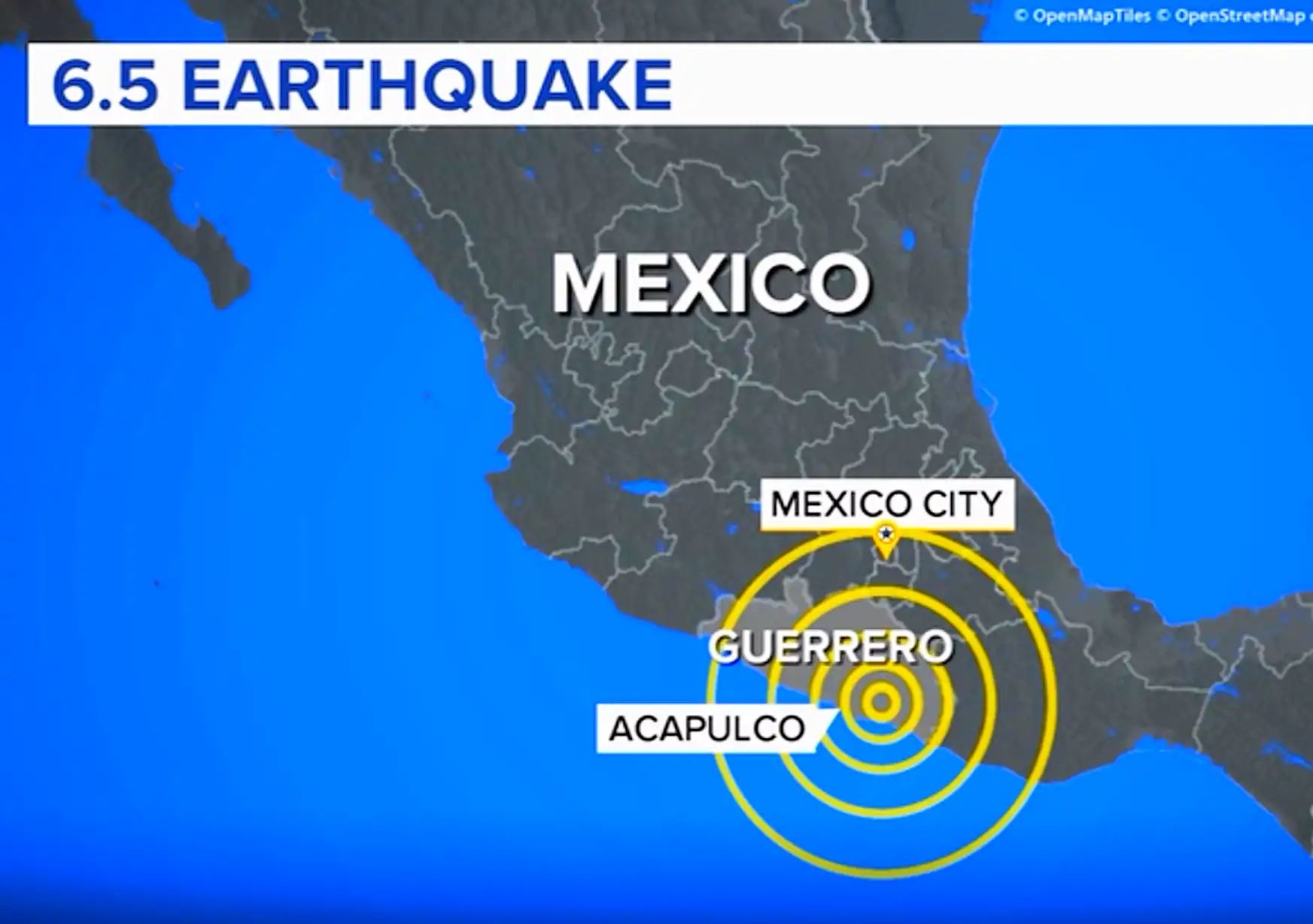
A powerful magnitude 6.5 earthquake struck near San Marcos in Guerrero, southern Mexico, on January 2, 2026. The quake was felt across a wide area including Acapulco and Mexico City, triggered seismic alarms, interrupted a presidential press briefing, and sent residents into the streets. Authorities reported no immediate major damage, but assessments continued amid heightened public concern.
Earthquake jolts southern and central Mexico
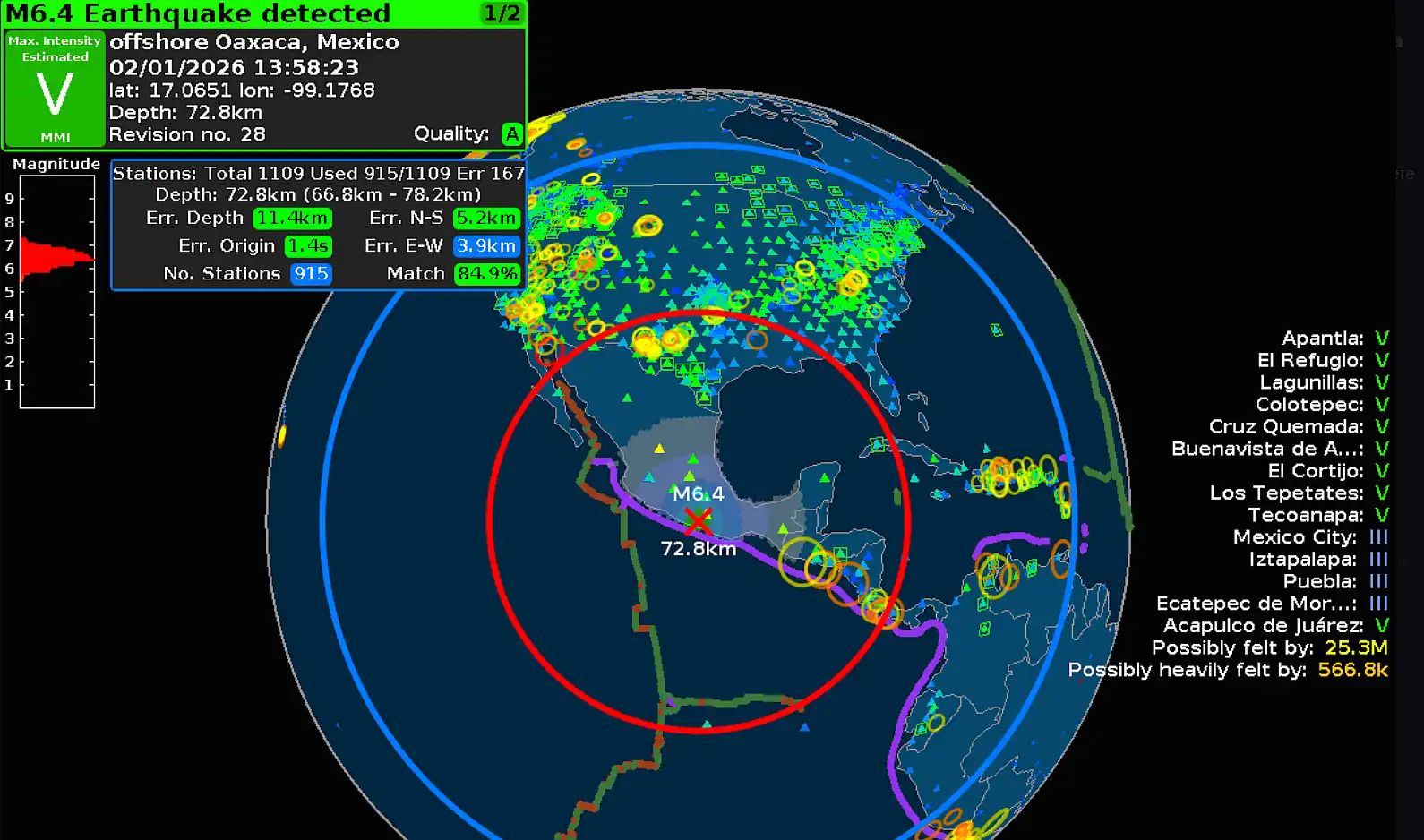
A strong earthquake with a preliminary magnitude of 6.5 struck southern Mexico on Friday, January 2, 2026, sending tremors across a wide swath of the country and sharply reminding residents of the region’s persistent seismic risk. The quake was powerful enough to be felt far beyond its epicentral area, rattling buildings in coastal Guerrero, shaking the resort city of Acapulco, and activating seismic alert systems as far away as Mexico City.
The epicenter was located near the town of San Marcos in the state of :contentReference[oaicite:0]{index=0}, a region well known for frequent seismic activity due to its position along the Pacific coast. According to Mexico’s national seismological agency, the earthquake occurred in the early afternoon local time, when offices, schools and tourist areas were active, increasing public exposure and anxiety.
Location, depth and seismic characteristics
The U.S. Geological Survey reported that the earthquake occurred at a depth of approximately 35 kilometers, or about 21.7 miles below the surface. Its epicenter was estimated to be roughly 2.5 miles north-northwest of Rancho Viejo, Guerrero, in the mountainous interior approximately 57 miles northeast of Acapulco. This depth placed the quake in the category of intermediate-depth events, which often produce strong and widely felt ground motion.
At magnitude 6.5, the earthquake released significant energy, capable of causing damage near the epicenter and strong shaking over a broad region. Although not considered a so-called “great” earthquake, an event of this size is more than sufficient to damage poorly constructed buildings, trigger landslides in mountainous terrain, and cause panic in densely populated urban centers.
Mexico Earthquake – Short Summary (January 2, 2026) Magnitude: 6.5 Location: Guerrero state (near San Marcos) Time: 07:58 local time Felt in: Mexico City, Guerrero, Oaxaca Seismic alarm sounded in Mexico City, people rushed to the streets. President Sheinbaum’s press conference… pic.twitter.com/vP8uzivoI4
Presidential briefing interrupted by seismic alarms
The impact of the quake was underscored by its timing. As the ground shook, seismic alarms sounded in Mexico City, interrupting the first press briefing of the new year by President Claudia Sheinbaum. The alert system, designed to provide residents with precious seconds of warning before strong shaking arrives, prompted journalists, officials and nearby residents to pause and take cover.
Shortly after the shaking subsided, the president resumed the briefing and addressed the situation publicly. She stated that she had already spoken with Guerrero Governor Evelyn Salgado, who reported that no serious damage or casualties had been confirmed at that time. The swift communication between federal and state authorities reflected Mexico’s well-developed earthquake response protocols, shaped by decades of seismic experience.
Public reaction in Acapulco and Mexico City
In coastal areas near the epicenter, including Acapulco, residents and tourists reported strong shaking that lasted several seconds. Many people rushed out of hotels, homes and restaurants, gathering in open spaces as a precaution against potential aftershocks. Social media videos showed swaying buildings, shaking light fixtures and people standing in the streets waiting for further instructions.
In :contentReference[oaicite:1]{index=1}, hundreds of kilometers from the epicenter, the quake was also clearly felt. Office workers and residents evacuated buildings after seismic alarms sounded, following well-rehearsed emergency procedures. For many, the experience revived memories of past destructive earthquakes that have left deep scars on the capital.
No immediate reports of major damage
Initial assessments suggested that the earthquake did not cause widespread structural damage or large numbers of injuries. Authorities emphasized, however, that early reports can change as inspections continue, particularly in rural or mountainous areas where access is limited and communication can be disrupted.
Emergency services were placed on alert across Guerrero and neighboring states, and teams began checking critical infrastructure such as roads, bridges, hospitals and power networks. Given the depth and magnitude of the event, officials also monitored the risk of landslides in steep terrain, a common secondary hazard following earthquakes in southern Mexico.
Aftershocks and ongoing monitoring
Seismologists warned that aftershocks were likely in the hours and days following the main quake. Aftershocks are smaller earthquakes that occur as the crust adjusts to the stress changes caused by the initial rupture. While typically less powerful, aftershocks can still pose risks, particularly to already weakened structures and nervous populations.
Mexico’s seismic monitoring networks continued to track ground motion across the region, providing real-time data to authorities and the public. Scientists emphasized that while aftershocks cannot be predicted with precision, their occurrence is a normal part of the seismic process and should be expected after a magnitude 6.5 event.
Why Guerrero is so seismically active
The Guerrero region lies along the boundary where the Cocos tectonic plate is subducting beneath the North American plate. This process, known as subduction, generates intense stress as one plate is forced beneath another. When that stress is released suddenly, it produces earthquakes, some of which can be extremely powerful.
Southern Mexico, particularly along the Pacific coast, has experienced numerous significant earthquakes throughout recorded history. The geological setting makes seismic activity inevitable, and scientists consider the region one of the most earthquake-prone in the country. This reality has driven the development of strict building codes and advanced early warning systems, especially in major cities.
Early warning systems and public preparedness
The activation of seismic alarms in Mexico City demonstrated the effectiveness of the country’s earthquake early warning system. Although residents may only receive seconds of notice, those seconds can be enough to move away from windows, stop machinery, and take protective actions that reduce injuries.
Public education campaigns and regular earthquake drills have helped instill a culture of preparedness. Many residents knew exactly how to respond when alarms sounded, evacuating calmly and assembling in designated safe areas. Authorities repeatedly stress that preparedness remains the most effective defense against earthquake-related injuries.
Tourism and economic considerations
Acapulco, one of Mexico’s most famous Pacific coast resorts, was again in the spotlight following the quake. While no major damage was immediately reported, even moderate earthquakes can disrupt tourism by prompting temporary closures, inspections and cancellations. Local businesses and hotels conducted safety checks to reassure visitors.
In the broader economic context, earthquakes of this magnitude can have ripple effects even without severe destruction. Temporary disruptions to transportation, commerce and public services can accumulate costs, particularly in regions still recovering from previous natural disasters.
Historical context and recent seismic events
Mexico has endured some of the most devastating earthquakes in the Western Hemisphere, including the catastrophic 1985 Mexico City earthquake and the powerful 2017 Puebla earthquake. Each event has shaped national policy, engineering practices and public awareness.
The January 2026 Guerrero earthquake adds to a recent pattern of moderate-to-strong seismic activity along the Pacific margin. While each event is unique, the clustering of earthquakes in this zone reinforces scientific assessments that stress continues to accumulate along the subduction interface.
Scientific perspective and uncertainty
Seismologists caution that individual earthquakes cannot be used to predict future large events with certainty. However, detailed analysis of seismic sequences helps scientists refine hazard models and improve risk assessments. Data from this earthquake, including its depth, rupture characteristics and aftershock distribution, will be studied closely in the coming months.
Experts also emphasize that while the absence of major damage in this case is encouraging, it should not lead to complacency. A slightly shallower or larger event in the same region could produce far more serious consequences.
Outlook in the days ahead
In the immediate aftermath, authorities continued damage assessments and urged residents to remain cautious, particularly in areas with visible cracks, unstable slopes or compromised structures. The possibility of aftershocks means that vigilance remains necessary even after the main shaking has passed.
Weather conditions and daylight in the days following the quake were expected to aid inspection efforts, allowing engineers and emergency teams to access affected communities more easily. Updates from state and federal agencies were anticipated as more information became available.
Conclusion
The magnitude 6.5 earthquake near San Marcos, Guerrero, served as a stark reminder of Mexico’s seismic reality. While the event caused widespread alarm and momentary disruption, early indications suggested that strong preparedness measures, effective early warning systems and rapid official response helped limit its impact.
As Mexico continues into 2026, the focus remains on readiness, resilient infrastructure and public awareness. In a country where earthquakes are an unavoidable natural hazard, the ability to respond quickly and calmly remains the most powerful tool for protecting lives.
Sources referenced for this report include official statements from Mexico’s national seismological agency, assessments by the :contentReference[oaicite:2]{index=2}, and verified media documentation from January 2 and 3, 2026.
The Founder and Chief Meteorologist at Pogodnik.com. With over 15 years of operational experience in synoptic analysis and climate forecasting, he specializes in storm tracking, magnetic storms, and atmospheric dynamics. A recognized expert in Ukraine’s meteorological sector, he maintains strategic collaborations with global agencies, including NOAA and ECMWF, to ensure high-precision data integration. His analytical reviews and scientific contributions are regularly featured in leading media outlets dedicated to weather science and environmental trends.