Trump’s NOAA Purge: Will America’s Weather Forecasts Survive La Niña, a Weak Polar Vortex, and Global Warming?
Weather and climate data—vital to everything from your daily forecast to hurricane warnings—are under threat. The National Oceanic and Atmospheric Administration (NOAA), the backbone of America’s weather prediction system, is facing a crisis that could leave the nation vulnerable at a time when accurate forecasts are more critical than ever. On February 27, the Trump administration launched a wave of mass firings at NOAA, targeting scientists, engineers, and researchers who have spent decades safeguarding public safety. With La Niña looming, a weakened polar vortex, and global warming accelerating, these cuts could cripple our ability to predict the next storm—or worse.
NOAA Under Siege: What’s Happening?
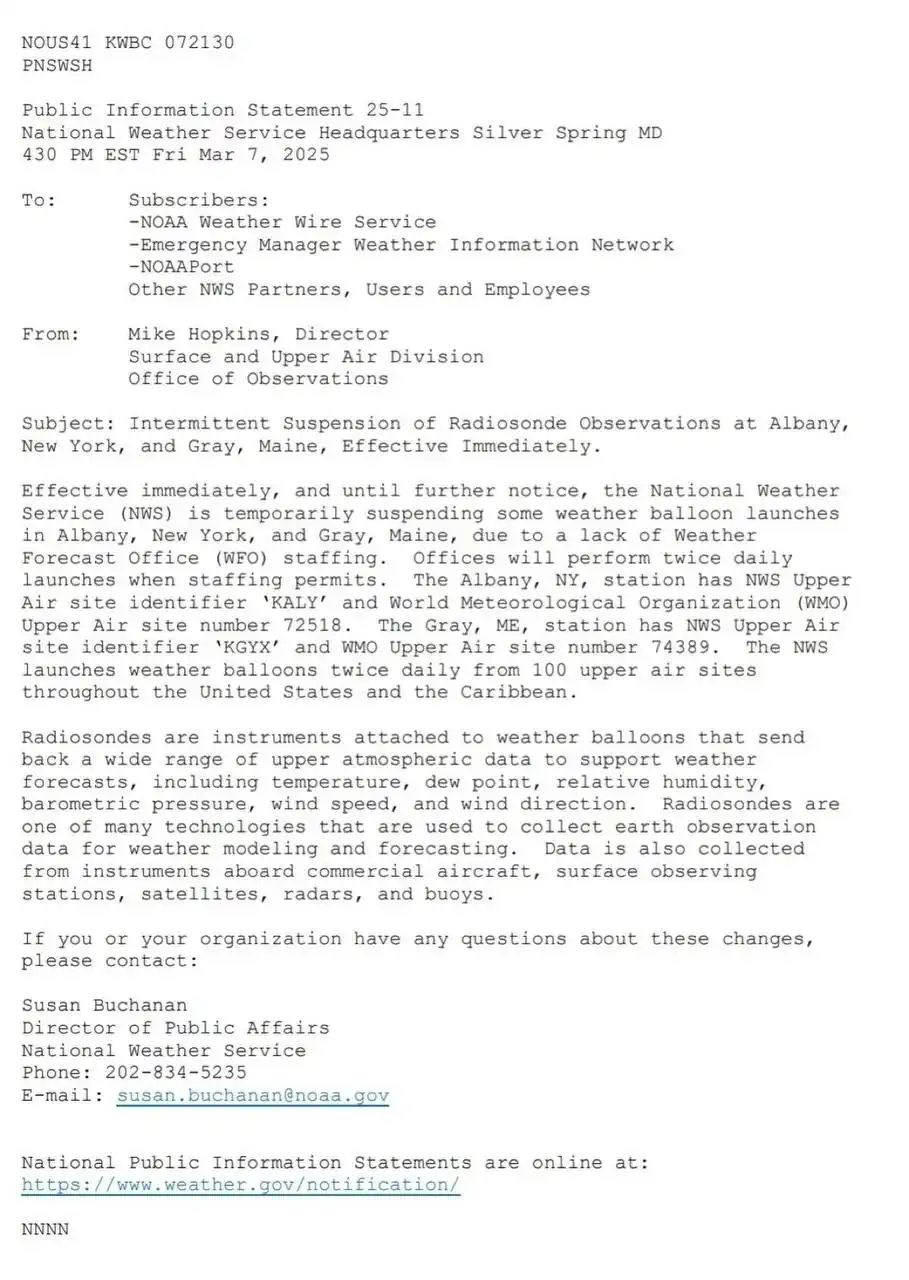
NOAA isn’t just another government agency—it’s the nerve center for global weather forecasting, ocean monitoring, and climate research. Its satellites track hurricanes barreling toward the Gulf Coast, its supercomputers crunch data for your local five-day forecast, and its scientists warn us about shifting climate patterns. But the new administration sees it differently. Sources within NOAA, speaking on condition of anonymity, confirm that the firings began abruptly, with little explanation beyond vague references to “efficiency” and “realignment.” Hundreds of staff—many with irreplaceable expertise—have been shown the door, and whispers of steep budget cuts are circulating in Washington.
The timing couldn’t be worse. Just weeks into Trump’s second term, this purge has sent shockwaves through the scientific community. “It’s unethical and chaotic,” one former NOAA researcher told me. “You don’t gut an agency like this without risking lives.” The administration hasn’t responded to requests for comment, but the message is clear: NOAA’s mission is being deprioritized at a pivotal moment for America’s climate and weather.
A Perfect Storm: La Niña, Polar Vortex, and Global Warming
Let’s break down why this matters now. First, La Niña—the cooling of Pacific Ocean waters—is already underway, according to NOAA’s own Climate Prediction Center (at least, while it’s still operational). La Niña often brings wetter winters to the Pacific Northwest, droughts to the South, and a hyperactive Atlantic hurricane season. Last year’s storms battered coastal states, and 2025 could be worse. Without NOAA’s full capacity—its satellites, buoy networks, and modeling teams—forecasters might miss the early signs of the next Category 5.
Then there’s the polar vortex, that swirling mass of cold air over the Arctic. It’s been weakening, a trend linked to global warming, and when it wobbles, it sends frigid blasts south. Remember Texas’s deadly 2021 freeze? A shaky vortex could do that again, but with NOAA’s staff slashed, real-time warnings could lag. “We’re flying blind if the data pipeline breaks,” a meteorologist from the National Weather Service (a NOAA subsidiary) confided.
And don’t forget global warming. Rising temperatures are juicing up storms, heatwaves, and wildfires. NOAA’s climate models—built by the very people now out of jobs—help cities prepare for 100-year floods that now hit every decade. Strip away that expertise, and you’re left with guesswork.
The Ripple Effect: From Satellites to Your Phone
Here’s the kicker: NOAA doesn’t just serve the U.S. Its data feeds global weather systems, private companies like AccuWeather, and even your phone’s weather app. Websites like ours pull real-time stats straight from NOAA’s servers—data that’s now at risk. If those servers go dark or updates slow to a trickle, there’s no Plan B for some datasets. European models, like the ECMWF, are good, but they’re not a full substitute—NOAA’s reach is unmatched, with 15 satellites and a network of ocean buoys no one else can replicate.
I’ve seen the numbers: staffing cuts could delay satellite maintenance, hobble supercomputer upgrades, and stall research into next-gen forecasting. One insider warned, “We’re already stretched thin. Lose more people, and errors creep in—big ones.” A missed hurricane track or an unpredicted heatwave could mean billions in damages and lives lost.
Cities at Risk: Urban America in the Crosshairs
Urban areas—home to 80% of Americans—face the biggest fallout. Cities like Miami, already sinking under sea-level rise, rely on NOAA for storm surge predictions. New York, battered by Superstorm Sandy, needs precise snow and wind forecasts when the polar vortex dips. And California, still smoldering from last year’s wildfires, depends on NOAA’s fire weather alerts. Weaken that system, and mayors are left scrambling. “It’s not just about rain or shine,” a city planner from Houston told me. “It’s about infrastructure, evacuations, survival.”
The Allergy Connection: A Hidden Blow
There’s another angle: allergies. With La Niña shifting weather patterns and global warming extending pollen seasons, millions of Americans are sneezing through spring and fall. NOAA tracks pollen triggers—like ragweed blooms tied to warm spells—but that data could vanish if the agency’s climate division takes a hit. For the 50 million allergy sufferers, that’s one more reason to worry.
The Cost of Chaos: Who Pays?
The administration might frame this as cost-cutting, but the real price tag is staggering. A botched forecast costs lives and dollars—Hurricane Katrina’s $125 billion toll is a stark reminder. Meanwhile, NOAA’s budget—$6.9 billion in 2024—is a drop in the federal bucket. Gut it, and you’re not saving money; you’re shifting the burden to taxpayers when disaster strikes.
This isn’t just a science story—it’s a public safety crisis. Weather and climate data, like what powers this site, are at risk. The Trump administration must reverse these firings and restore NOAA’s funding. If they don’t, we’re all in the dark—literally and figuratively.
Here’s what you can do: Share this on X, TikTok, anywhere. If you’re American, call your reps—Congress can still intervene. NOAA’s scientists deserve better, and so do you. Because when the next La Niña storm spins up, or the polar vortex collapses, we’ll need more than prayers to get through it. We’ll need data. And right now, that’s slipping through our fingers.
The Founder and Chief Meteorologist at Pogodnik.com. With over 15 years of operational experience in synoptic analysis and climate forecasting, he specializes in storm tracking, magnetic storms, and atmospheric dynamics. A recognized expert in Ukraine’s meteorological sector, he maintains strategic collaborations with global agencies, including NOAA and ECMWF, to ensure high-precision data integration. His analytical reviews and scientific contributions are regularly featured in leading media outlets dedicated to weather science and environmental trends.