Asia Braces for a Turbulent Autumn 2025: La Niña’s Fury Meets Polar Vortex Chaos
A Season of Extremes Awaits Asia
As the leaves begin to turn and summer’s heat fades across Asia, the weather for autumn 2025 promises dramatic shifts that could reshape daily life from the humid tropics to the frigid steppes. Drawing on long-term forecasting models from NOAA and ECMWF, this season’s outlook hinges on a developing La Niña and the evolving behavior of the polar vortex, setting the stage for stark contrasts. While September’s weather may linger with unusual warmth, October and November could bring sharper transitions, blending persistent rains, typhoon threats, and early cold snaps that foreshadow a challenging winter.
La Niña: The Tropical Game-Changer
At the core of autumn’s narrative is La Niña, the cooling phase of the El Niño-Southern Oscillation (ENSO) cycle. NOAA’s Climate Prediction Center forecasts a 53-60% chance of a weak, short-lived La Niña emerging between September and November, potentially peaking in October-December before fading to neutral conditions. Even in its modest form, La Niña will amplify trade winds, pushing warmer waters toward Indonesia and enhancing convection over Southeast Asia. This translates to wetter-than-average conditions in the equatorial belt, heightening flood risks while suppressing rainfall in subtropical zones like southern India.
Oceanic and Atmospheric Drivers Collide
Complementing La Niña is a negative Indian Ocean Dipole (IOD), where cooler eastern Indian Ocean waters boost rainfall over Indonesia and Malaysia. ECMWF’s seasonal models suggest this pairing will drive precipitation 20-50% above average in Southeast Asia’s Maritime Continent. NOAA’s CFSv2 projections indicate warmer western Pacific sea surface temperatures, fueled by a positive Pacific Decadal Oscillation (PDO), which could intensify typhoons targeting the Philippines, Vietnam, and southern China. The Madden-Julian Oscillation (MJO) will further pulse every 30-60 days, triggering clusters of tropical storms in September and October.
The Polar Vortex and Arctic Influences
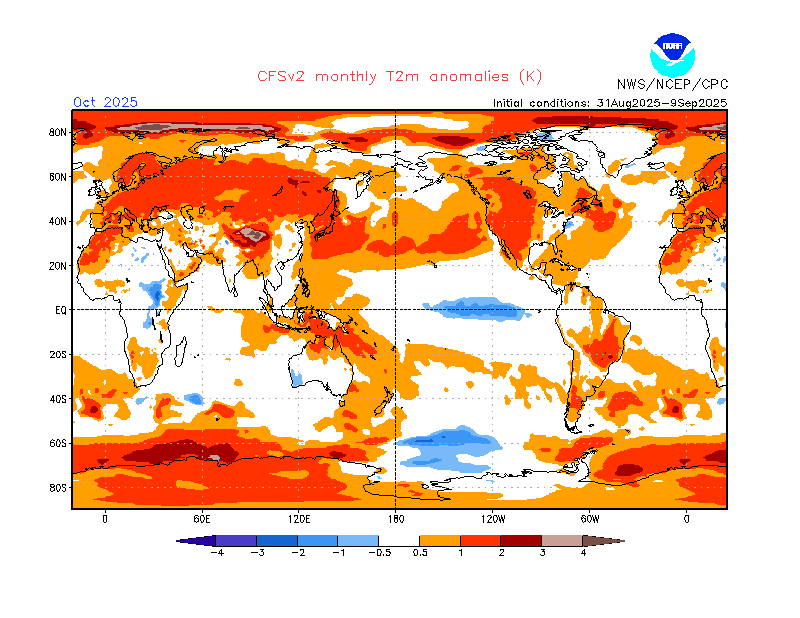
In northern Asia, the Arctic Oscillation (AO) and North Atlantic Oscillation (NAO) will steer cold air flows from Siberia. AER’s polar vortex analysis shows the AO starting positive but trending negative by mid-September, fostering ridging over western Asia and troughing in Siberia. This could keep temperatures normal to 1-2°C above normal across much of the continent in September, per ECMWF. However, NOAA models predict a shift by October, with cooler anomalies creeping into northern regions as the polar vortex consolidates.
South Asia: Monsoon’s Last Stand
South Asia’s weather for autumn 2025 faces volatility. In India and Pakistan, La Niña often delays monsoon withdrawal, extending heavy rains into September and raising flood risks in the north, where precipitation could exceed norms by 10-30%, according to WMO updates. By October, ECMWF forecasts drier conditions in southern India and Sri Lanka, with below-average rainfall potentially causing drought stress amid lingering heat. Temperatures may start 1-3°C above normal in September, per NOAA, before moderating in November as westerly winds strengthen.
Southeast Asia: A Deluge Looms
Southeast Asia, the wet epicenter, faces amplified risks from La Niña’s grip. Indonesia, Malaysia, the Philippines, and Vietnam could see rainfall 20-40% above average, driven by enhanced convection and a negative IOD. October’s weather may bring peak typhoon activity, with NOAA warning of heightened storm intensities due to warmer western Pacific waters. Temperatures will hover near or slightly above normal, around 28-32°C, but incessant rains could trigger landslides and urban flooding, echoing past La Niña patterns.
East Asia: From Warmth to Winter’s Edge
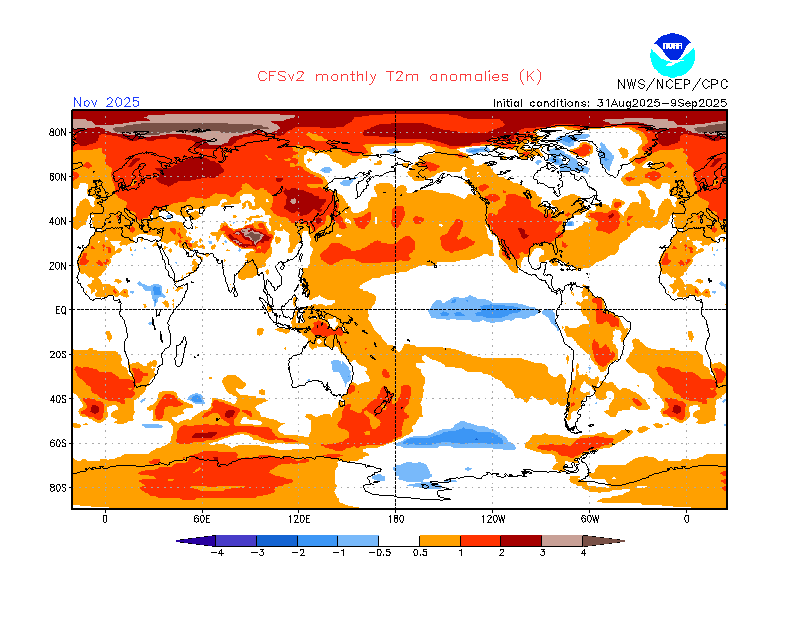
East Asia, including China, Korea, and Japan, will experience a split season. September’s weather, per AER analyses, favors above-normal temperatures along coasts, potentially 2-4°C warmer, as ridging dominates. Precipitation may be spotty, with typhoon remnants bringing heavy downpours to southern China and Taiwan early on. NOAA’s CFSv2 models indicate a late October transition, where negative AO phases allow Siberian cold air to spill south, dropping temperatures below normal in northern China and Korea. November could bring early snow to Hokkaido and northeast China, with drier conditions inland.
Central Asia: Heat to Frost
Central Asia, from Kazakhstan to Uzbekistan, starts hot and dry under positive NAO influences, with ECMWF projecting temperature anomalies of +1-3°C and below-average rains in September. This exacerbates water shortages, but by November, the building Siberian high—tied to Eurasian snow cover feedback—could usher in freezes 5-10°C below normal. Precipitation remains low, heightening dust storm risks in the arid steppes.
Siberia and the Russian Far East: Extreme Swings
Siberia and the Russian Far East embody the season’s extremes. Early autumn warmth, driven by record-low Arctic sea ice, may push September highs to 20-25°C at high latitudes, per AER’s monitoring. Yet, October’s rapid snow expansion, forecasted by NOAA, reinforces a cold dome, leading to sub-zero plunges by November and setting up cold outflows into East Asia.
Middle East: Persistent Heat and Dryness
The Middle East, including Iran, Afghanistan, and the Arabian Peninsula, faces prolonged warmth and dryness. With no major favoring rain, ECMWF models predict temperatures 2-4°C above average and precipitation deficits of 30-50%, extending heatwaves into October and straining resources.
Temperature and Precipitation Outlooks
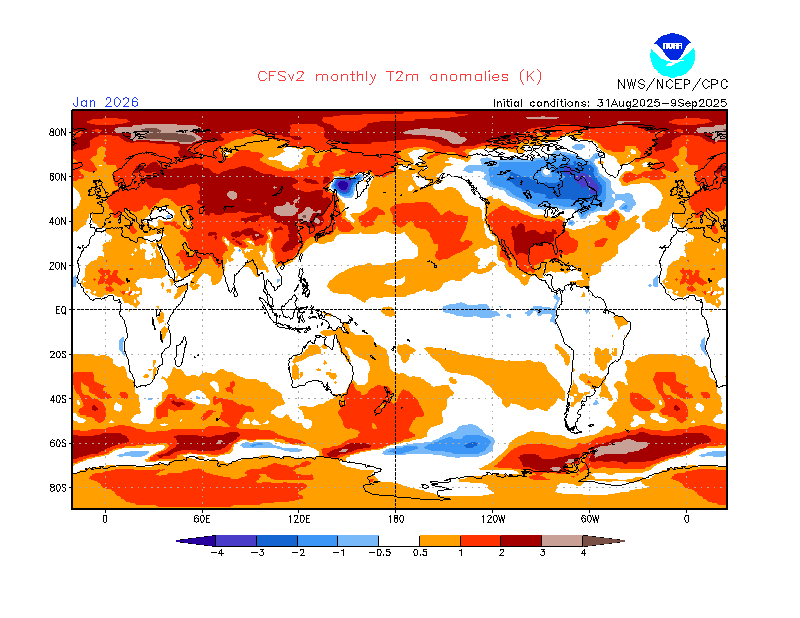
Temperature outlooks highlight warm zones in southern and eastern Asia during September-October, with anomalies peaking at +2-4°C in India, China, and the Middle East, per NOAA. Cold pockets emerge later in Siberia, Mongolia, and northern China by November, with drops of 3-5°C below normal. Central Asia sees mixed signals, starting hot before cooling sharply. Precipitation patterns show wet dominance in Southeast Asia (20-50% above normal), dry spells in southern India, the Arabian Peninsula, and Central Asia post-monsoon, and stormy bursts in East Asia from typhoons, shifting to drier, colder regimes.
The Climate Web
La Niña’s wet tropics contrast with dry subtropics, amplified by a negative IOD boosting Indonesian rains. The MJO ignites storms, while AO/NAO phases time Siberian surges. PDO’s warm pockets intensify typhoons, and the warm Atlantic Multidecadal Oscillation (AMO) bolsters global storm energy.
The easterly Quasi-Biennial Oscillation (QBO) weakens the polar vortex, Eurasian snow feedback locks in cold highs, and subtle influences like the approaching solar maximum enhance tropical convection. Monsoon delays, jet stream variability, subtropical highs, Tibetan Plateau cooling, volcanic aerosols, and the lunar nodal cycle further shape Asia’s volatile weather.
Hazards to Watch
Hazards loom large: typhoon landfalls with winds over 150 km/h battering Taiwan, the Philippines, and Japan; flooding in Pakistan, Bangladesh, and Indonesia from prolonged rains; droughts and dust in Iran and Afghanistan; and Arctic warmth in Siberia yielding to November freezes. These extremes underscore climate volatility.
Polar Vortex’s Winter Implications
The polar vortex’s influence on winter 2025-26 demands attention. ECMWF and AER forecast a weaker-than-normal vortex in early to mid-winter, disrupted by negative QBO and potential stratospheric warmings. This could stretch the vortex, allowing frequent cold air outbreaks into northern Asia. Siberia, Mongolia, and northern China face prolonged freezes, with temperatures 10-15°C below average during January-February.
East Asia may see increased snowfall and disrupted transport, while Central Asia faces amplified cold waves. La Niña’s tail end could dry southern regions, but vortex disruptions might spill milder air southward intermittently. Historical analogs link stretched vortex events to eastern Asian cold intrusions, potentially spiking energy demands and stressing agriculture.
Asia’s weather for autumn 2025 weaves a tapestry of contrasts, where La Niña’s rains clash with polar precursors to a disruptive winter.
The Founder and Chief Meteorologist at Pogodnik.com. With over 15 years of operational experience in synoptic analysis and climate forecasting, he specializes in storm tracking, magnetic storms, and atmospheric dynamics. A recognized expert in Ukraine’s meteorological sector, he maintains strategic collaborations with global agencies, including NOAA and ECMWF, to ensure high-precision data integration. His analytical reviews and scientific contributions are regularly featured in leading media outlets dedicated to weather science and environmental trends.