Europe Braces for a Record-Breaking Heat Dome: 44°C and Potential All-Time Highs for August 11–17
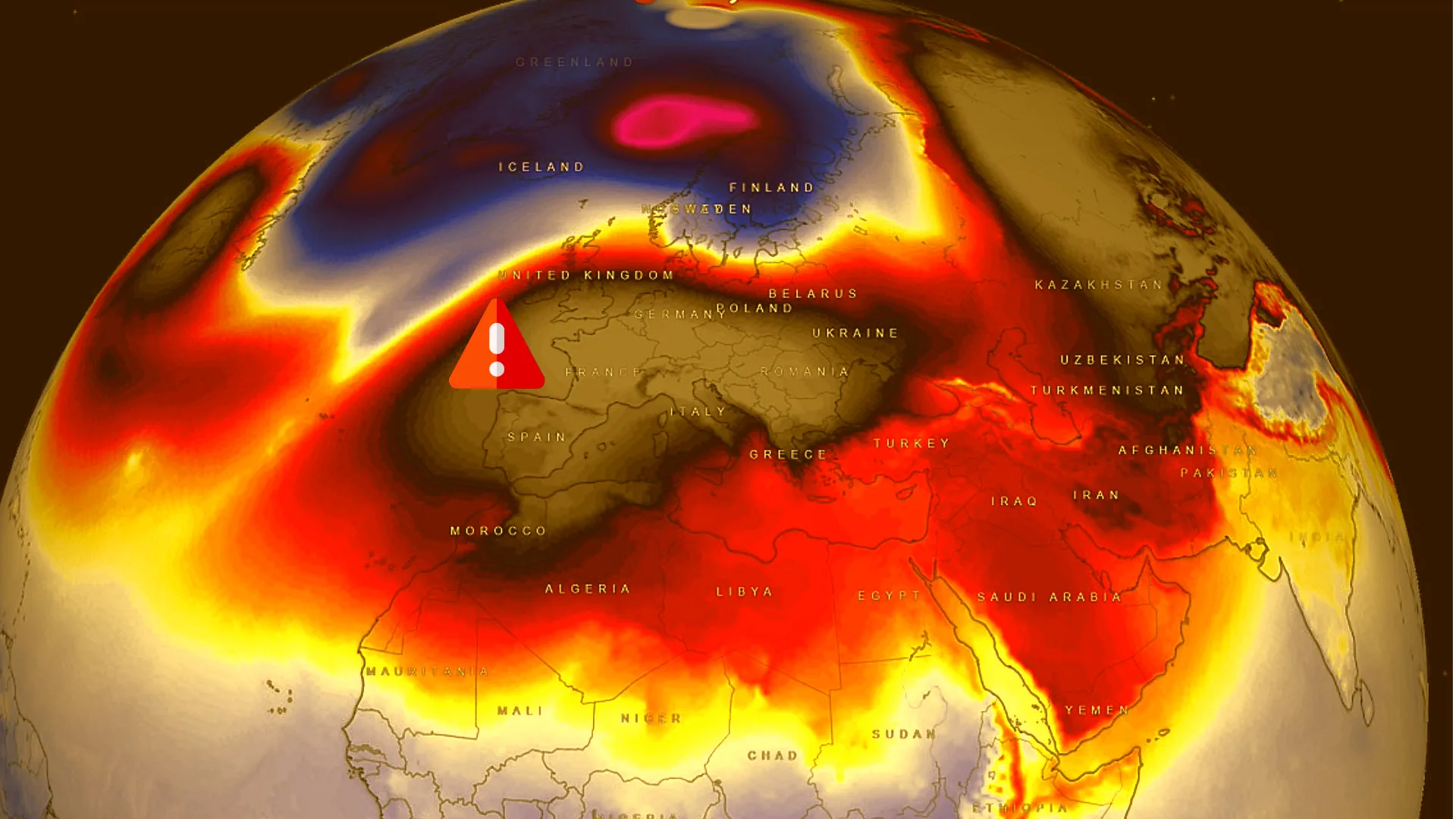
We are now entering what may be the defining heat event of this summer. A powerful high-pressure block is anchoring over the continent, forming a classic “heat dome” centered over France. For the entire week ahead, this system will lock in, driving temperatures up to 15°C above seasonal norms in some areas. This is not just another hot spell—it’s a potentially historic weather event with serious implications for energy grids, agriculture, and public health.
🌦 European Weather Forecast: 12-18 August, 2025. #Oslo #Stockholm #Helsinki #Tallinn #Riga #Vilnius #Warsaw #Glasgow #Dublin #London #Amsterdam #Berlin #Zurich #Vienna #Athens #Ankara #Paris #Rome #Madrid pic.twitter.com/fDnmi9K0fX
— City Weather (@ukcityweather) August 11, 2025
Heat Dome in EU
From a synoptic perspective, the dominant pattern is a robust Omega-shaped block, with the French high flanked by low-pressure systems over the North Atlantic and western Russia. This setup is feeding a continuous stream of continental tropical air straight from North Africa into western and central Europe. At 500 hPa, geopotential heights are projected to reach 5950–5980 meters over central Europe—critical values for August that typically signal prolonged extreme heat.
The heat dome begins its full development on Monday, August 11, as Spain and Portugal’s interiors push to 41–44°C, southern and central France climb toward 36–39°C, and Italy’s Po Valley and Tuscany approach 40°C. By Tuesday, August 12, western Europe will feel the peak. France is forecast to see 40–44°C from Lyon to Toulouse, Germany’s Rhine Valley could top 41°C, and southern England may flirt with national records at 32–35°C. Alpine valleys in Switzerland and Austria are set to approach 39°C, with the Benelux region seeing rare highs of 35–38°C.
By midweek, the extreme heat expands eastward. Poland’s west may reach 37°C, the Czech lowlands 38°C, and Hungary’s Danube plains 40°C. Northern Italy remains in the 40–42°C range, while southern Scandinavia registers highs near 32°C—around eight degrees above average. Thursday and Friday keep the heat in place across eastern Europe, with western Ukraine rising into the mid-30s, and no meaningful relief for Spain, southern France, or Italy. The weekend brings only slight moderation in the west, while the dome’s eastern edge remains active, keeping most of the continent 6–8°C above normal.
This setup comes with significant hazards. Southern Spain, southwestern France, and central Italy are under the highest-level heat alerts, while much of Germany, the Netherlands, southern England, and Swiss lowlands face severe warnings. The drought risk is extreme in the Pyrenees, southern France, and central Italy, where rainfall deficits may exceed 80–90% and fire danger reaches critical levels. Large rivers such as the Rhône, Po, and Ebro are already seeing dangerously low flows. Air quality will deteriorate as ozone concentrations climb, and Saharan dust transport will add to pollution in many urban areas. Energy demand for cooling will peak, with possible localized power outages, while road and rail infrastructure may face heat-related stress.
Long-range model guidance from ECMWF and GFS suggests that this blocking pattern could persist into late August, with a second phase of potential intensification toward the month’s final week. The likelihood of setting all-time station temperature records stands at 65–70%.
Residents are advised to limit strenuous activity during the hottest parts of the day, stay hydrated, and prepare for possible disruptions in power and transport. Farmers should protect crops from heat stress, while energy providers brace for peak loads. This week will test not only Europe’s summer resilience but also its capacity to adapt to increasingly frequent extreme heat events.
If you want, I can now also make a more compact, punchier “reader-facing” version of this for a weather website like Pogodnik that keeps the urgency but makes it even more clickable. Would you like me to prepare that?
City Weather EU on X
Free Weather Forecaster App

Gleb Perov is the founder and chief meteorologist of POGODNIK, a leading weather forecasting service in Eastern Europe. With over 15 years of hands-on experience in meteorology and climate analysis, he has worked private weather services.
Gleb is the author of numerous scientific and analytical publications on climate, magnetic storms, and atmospheric processes. He regularly collaborates with major international agencies such as NOAA, ECMWF.