Geomagnetic storm forecast : What Happened on the Sun

Earth is bracing for a sequence of powerful geomagnetic storms between October 15 and 17, 2025, as multiple Coronal Mass Ejections (CMEs), launched from the highly active sunspot region AR4246, surge toward our planet. According to NOAA‘s Space Weather Prediction Center (SWPC), models show at least two significant Earth-directed CMEs are expected to impact Earth’s magnetosphere, potentially causing G1 to G2-class geomagnetic storms and spectacular auroras across the Northern Hemisphere.
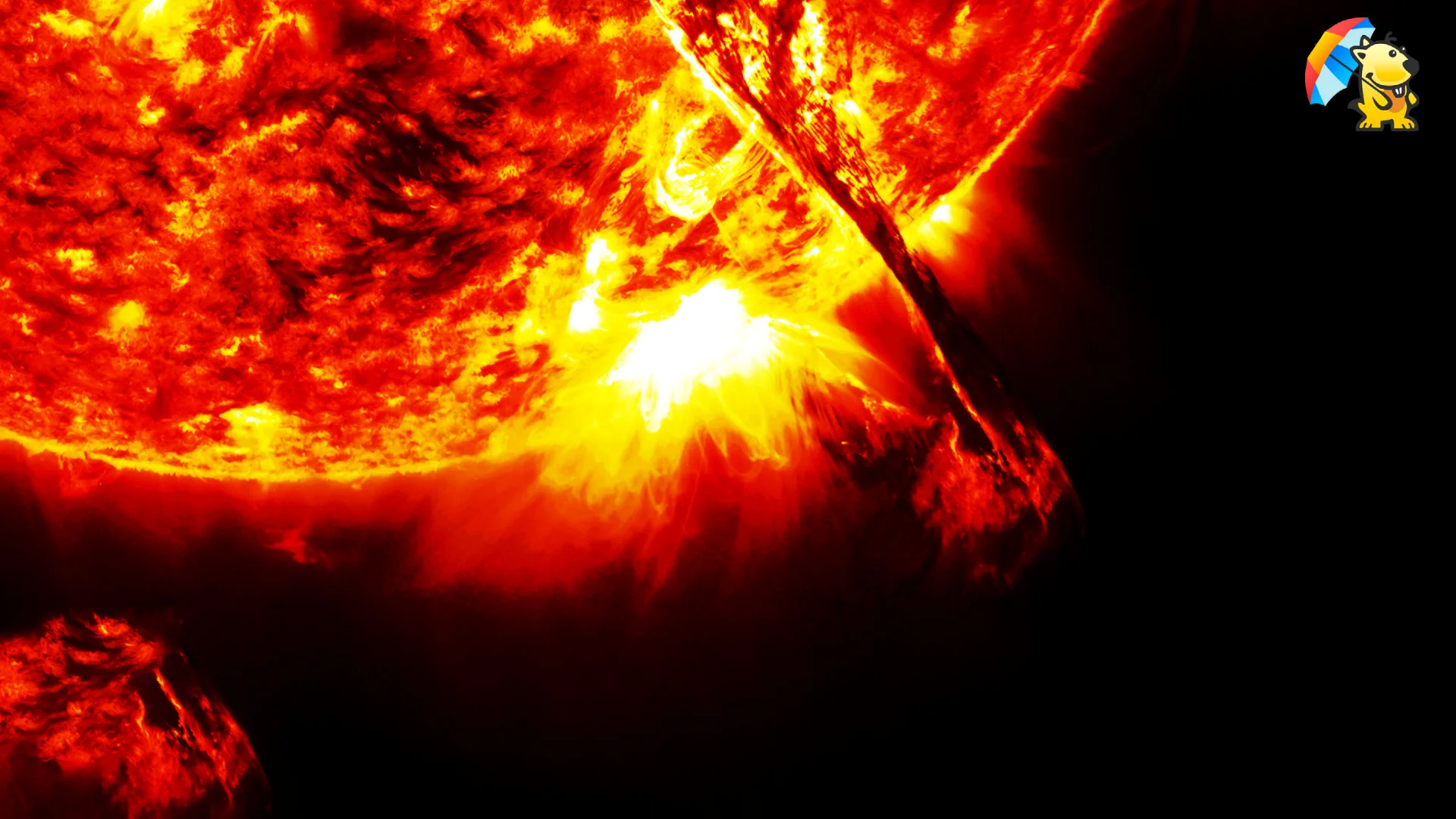
☀️ Solar Flares Ignite: What Happened on the Sun
On October 13, AR4246—located at N22W30 on the Sun’s visible disk—erupted with three M-class solar flares (M1.9, M2.7, and M1.2). These flares were accompanied by two fast-moving CMEs traveling at speeds exceeding 570 km/s, as detected by NASA‘s SDO and SOHO spacecraft.
The active region, exhibiting a complex beta-gamma-delta magnetic configuration, has rapidly expanded, spawning new sunspots and increasing the likelihood of further M-class and possible X-class flares in the coming days.
“This region has been crackling with magnetic energy,” said Dr. Tamitha Skov, a space weather physicist. “With four separate solar storms on the way, Earth’s space environment is about to get seriously shaken.”

🌍 What to Expect on Earth: Magnetic Storm Forecast
Modeling from NOAA’s ENLIL system suggests CME impacts could begin as early as late October 15, continuing through October 17, as solar wind from earlier eruptions preconditions Earth’s magnetosphere.
This overlap increases the likelihood of enhanced geomagnetic activity, potentially reaching Kp 5–6 (G1–G2 levels) — enough to cause:
- Minor fluctuations in power grids and satellite systems,
- Intermittent radio blackouts (R1–R2 level), and
- Visible auroras much farther south than usual.
Expected Kp index (NOAA SWPC):
| Date | Expected Kp Range | NOAA Scale |
|---|---|---|
| Oct 15 | 4–5 | G1 – Minor |
| Oct 16 | 5–6 | G2 – Moderate |
| Oct 17 | 4–5 | G1 – Minor |
The geomagnetic field, currently unsettled due to a negative polarity coronal hole high-speed stream, is expected to intensify once the CMEs arrive.
🌌 Aurora Forecast: A Northern Lights Spectacle
Skywatchers across Canada, Scandinavia, Scotland, and parts of northern U.S. states such as Montana, North Dakota, and Minnesota could be treated to brilliant auroral displays between October 15 and 17.
If geomagnetic conditions peak near G2 levels, auroras may be visible as far south as Seattle, Chicago, and possibly New York under clear skies.
Observers are encouraged to check real-time updates through NOAA’s Aurora Dashboard and local space weather apps for the best viewing times.
🚨 Space Weather Impacts and Outlook
- Satellite operators should expect elevated drag in low-Earth orbit and potential anomalies in onboard electronics.
- Aviation communications, especially at high latitudes, may experience HF signal degradation.
- Navigation systems (GPS, GNSS) could see temporary signal scintillation during peak storm hours.
Meanwhile, the solar wind speed, currently hovering near 700 km/s, will likely increase with the CME impacts, amplifying the magnetospheric compression and auroral electrojet activity.
🛰️ NOAA Outlook Beyond October 17
Solar Region AR4246 remains magnetically active, with continued potential for M- and isolated X-class solar flares through the week.
SWPC forecasters are closely monitoring newly emerging sunspot regions AR4248 and AR4250, though they currently pose minimal threat.
If the magnetic complexity of AR4246 persists, further Earth-directed eruptions may occur by late October, continuing this cycle of elevated space weather activity.
🌠 geomagnetic storm forecast summary
- Multiple CMEs launched October 13 from AR4246 are en route to Earth.
- Impacts expected: October 15–17.
- Forecast: G1–G2 geomagnetic storms, possible auroras at mid-latitudes.
- Solar flares: Continued M-class activity, potential X-class risk.
Stay tuned for live updates from Weather Forecaster as our star continues to remind us who’s boss.
Geomagnetic storm forecast October 2025